A marked nature path gives you a limited set of viewpoints. Treat that as part of the photography exercise rather than a restriction to defeat. A different framing, a lower camera position from the path or a pause for changing light can produce a better image without stepping into vegetation.
Before the outing, choose one simple interest: leaf shapes, the relationship between a path and its surroundings, or broad landscape layers. This prevents every stop from becoming an attempt to photograph everything. It also helps you carry less. A phone and a small cloth may be enough for an observation-focused walk.
Keep your bag and straps close on narrow sections. Stop where others can pass, and look around before stepping backward to change the frame. A tripod can be awkward on a busy route and may be restricted at a particular site. Check the visitor rules if you intend to bring equipment beyond an ordinary handheld camera.
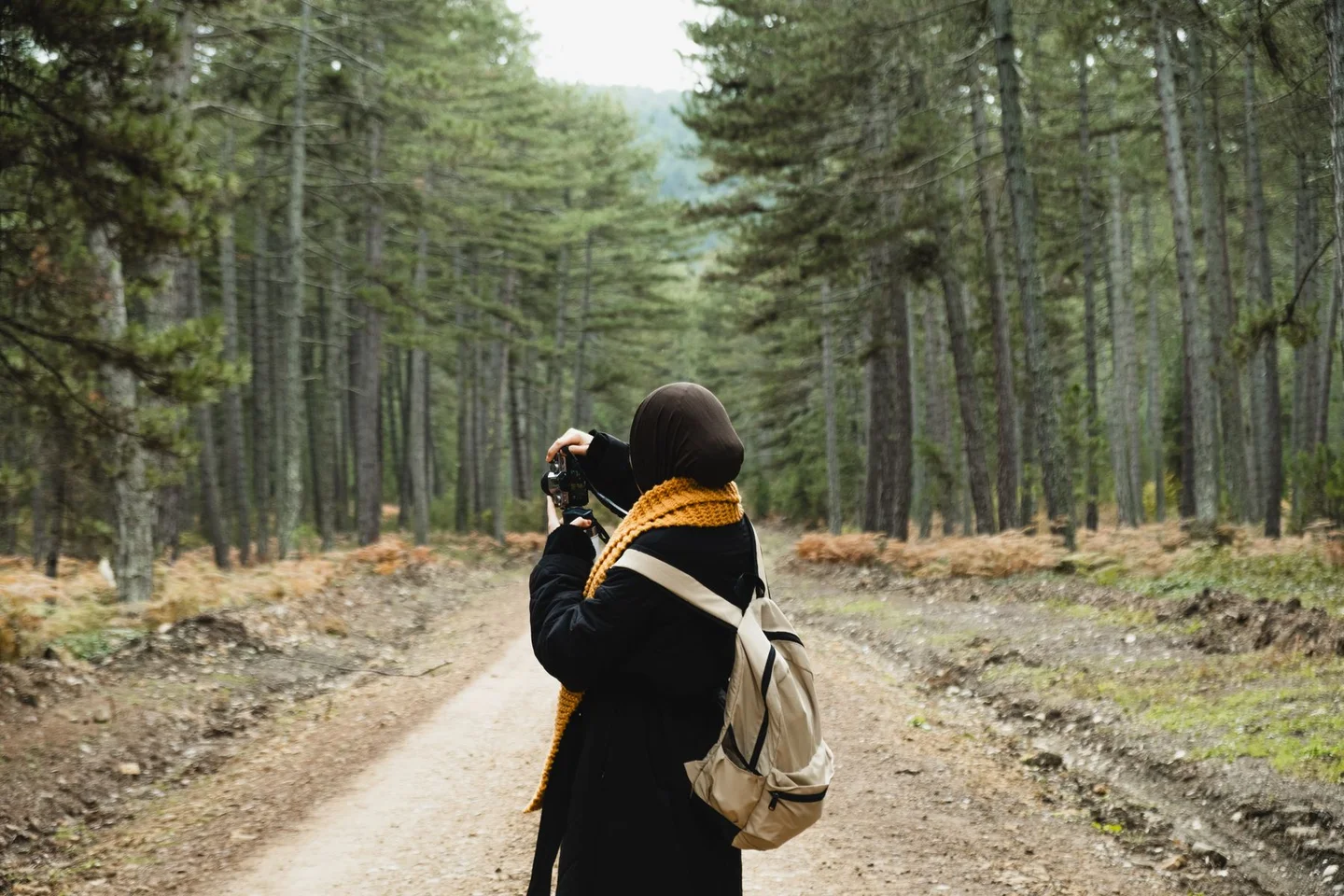
Choose a small sequence
Try making three pictures that serve different purposes: an establishing view, one detail and an image showing how visitors move through the place. This gives the set a story without requiring dozens of versions of the same subject. The third image might show a path curving into vegetation rather than a person posed beside a feature.
If you later share the photographs, describe what they actually show. Avoid naming a species or claiming a particular location unless you are sure. A precise caption such as a shaded section of the visitor path is more useful than an invented identification. Keep edits faithful to the scene if the images will help others understand the outing. Removing an access barrier from a picture, for example, can give a misleading impression of how closely visitors may approach.
Give the subject its surroundings
A close detail and a wider view work well together. Photographing bark alone records texture; including the tree and the slope explains where that texture belongs. Make the second picture before moving on. Later, it can be more useful than several nearly identical close-ups.
Avoid rearranging natural objects for a cleaner composition. Moving leaves, breaking a small branch or removing something from a pool changes the subject. Likewise, do not lure wildlife or use calls to create a pose. Accept an obscured view when that is how the animal or plant appears from the permitted route.
Leave space in the outing for looking without a screen. A photograph can draw attention to a detail, but reviewing every image immediately can make you miss the next part of the walk. Save longer sorting and editing for afterward. Keep notes about the location if useful, while avoiding publicising sensitive wildlife positions. The aim is to remember the place accurately, including its limits and the ordinary details between dramatic views.