Start with the shape of the walk
A loop promises that you will not retrace your steps, but that does not automatically make it the easier choice. Once you pass the halfway point, returning can mean completing the same amount of walking anyway. For a short forest outing, the useful question is where you can change your mind.
Look at the whole route, including the connection between the parking area and the marked start. A visitor map may show a compact circle while leaving out a long approach. Find the distance, climbing, surface and junctions rather than relying on a description such as gentle or family friendly. Ask staff whether the route is currently open and whether any sections have changed after rain.
A figure-eight route can offer more flexibility than one large circle. You may be able to walk one half, return to the visitor area, then decide whether everyone wants more. An out-and-back path has a different advantage: you already know the ground you will cross on the return. Neither shape is inherently better; they solve different problems.
Consider two routes with the same total distance. One returns to the entrance halfway through; the other crosses its farthest point before beginning a long climb home. For a group that wants to stop often, the first may be easier to manage even if the second has the more famous viewpoint. Mark those differences on the map before comparing photographs.
A loop also needs a direction. Where the site permits either direction, ask which way makes the surface and gradients easier to understand for your group. Do not reverse a one-way route simply because an online track does. Keep the official route name in your notes so that everyone is discussing the same walk when asking staff for advice. Similar names can refer to very different sections of a large forest park.
Give the stops their own time
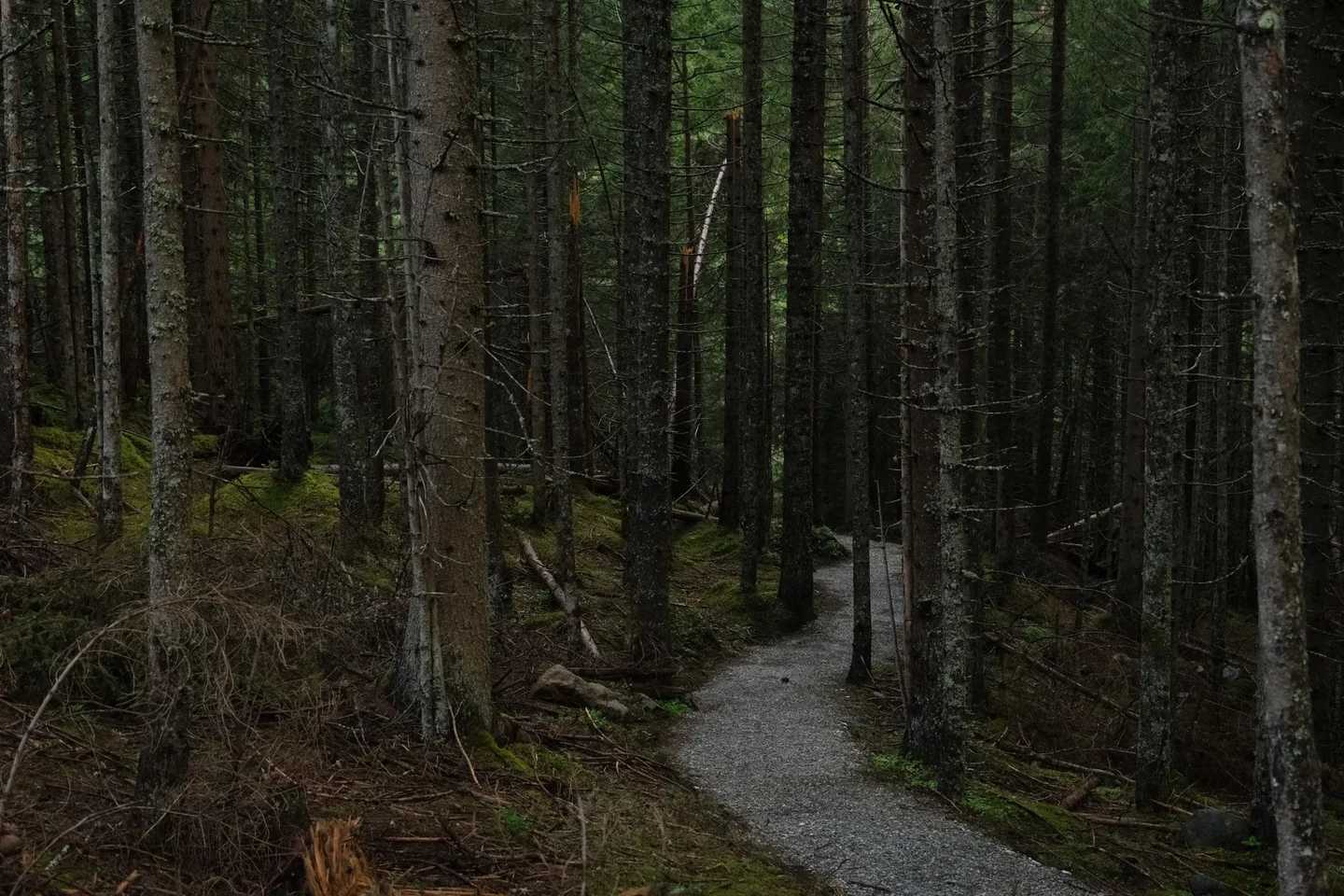
A stated walking duration rarely describes your exact day. Add the time you actually want for photographs, sitting by a clearing or reading signs. If the forest itself is the attraction, there is little point selecting a route that requires constant movement to finish before your ride home.
Choose one modest stopping place and one decision point. The stopping place is where you intend to linger. The decision point is where you check progress against daylight, weather and the group's energy. It should be a recognised junction, not an unmarked shortcut visible on a phone map.
Before leaving the visitor area, photograph the official map and identify the route markers. Keep the group together at junctions. If the signs on the ground disagree with an old downloaded track, follow current site instructions and seek advice. A completed loop is only one possible result of a forest day; an unhurried shorter walk is another.