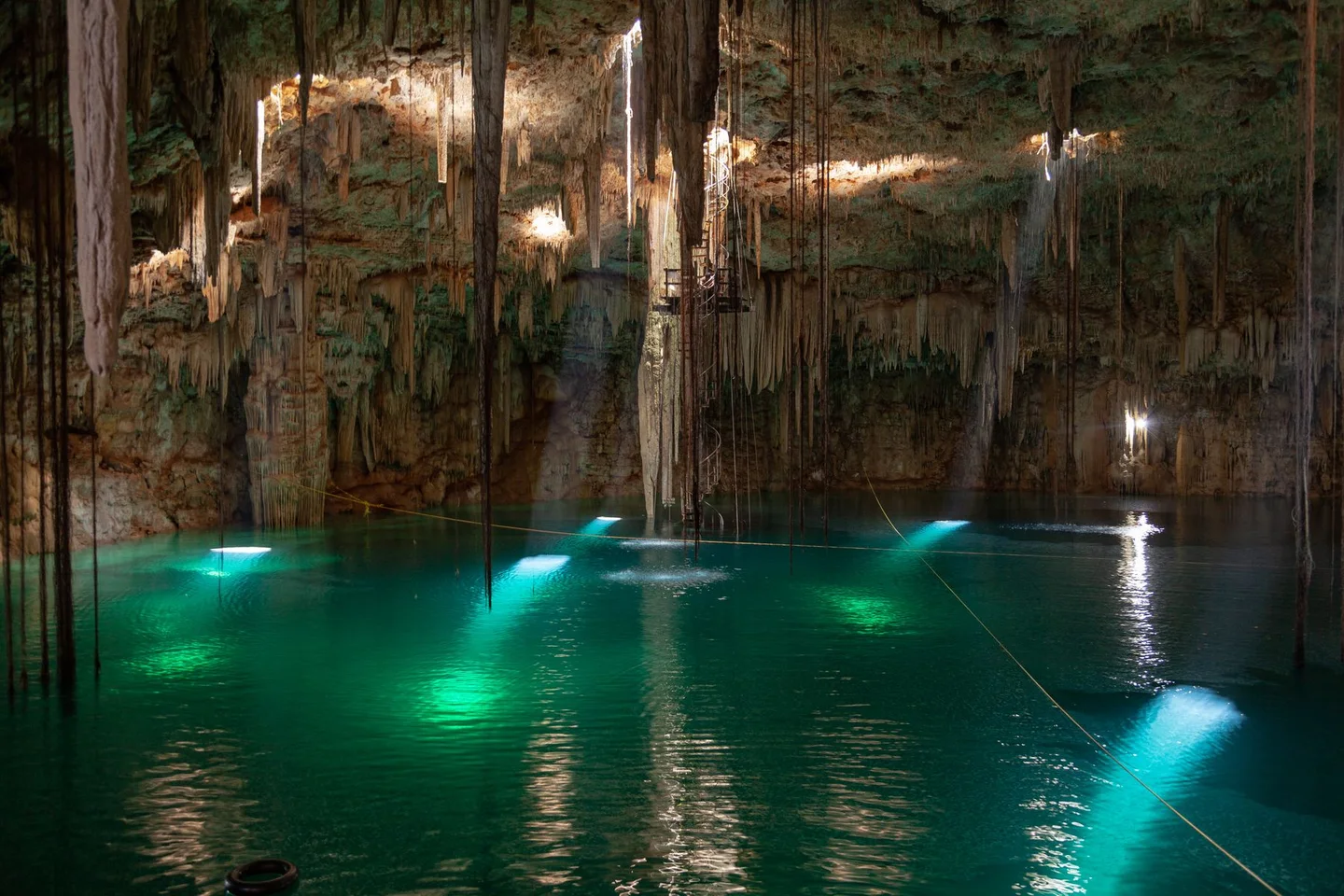
The photograph does not describe the entrance
An open cenote, a semi-open cenote and a cave cenote can feel remarkably different. The amount of sky is only part of the distinction. Steps, light, space around the water and the way visitors enter often matter more to the day than the colour in a photograph.
An open setting may let you appreciate the pool from above without descending immediately. A partly enclosed space can combine daylight with shaded rock. A cave visit may involve a darker approach and a more enclosed atmosphere. These are broad descriptions, not promises about accessibility, depth or swimming conditions at a particular site.
Ask to see photographs of the approach as well as the water. A dramatic image taken from below can hide a long staircase. Find out whether the steps have handrails, where belongings stay and whether a person who chooses not to swim can comfortably wait. If your group has mixed interests, this last question can decide whether the visit works.
A comparison for a mixed group
Imagine a group of four: two want to spend time in the water, one wants photographs and one would rather remain dry. The most dramatic cave image may attract everyone initially, but the visit will only work if the non-swimmers can enjoy the setting too. Ask where they may stay, whether that place is reached by the same stairs and whether the group can reunite without repeating a long approach.
A second comparison concerns the changing arrangement. If bags must remain at the entrance, find out what visitors may carry down. If lockers are available, confirm whether they are included and how they operate. These ordinary details determine how much you need to move between the water, the facilities and the exit. A simpler setting may provide more actual enjoyment than one with a complicated sequence of separate stops.
Look at the time you have after leaving the cenote. If the next destination involves a long transfer, allow for changing clothes and organising wet items before departure. A driver waiting at the entrance does not remove those tasks. Tell the group when it needs to be ready at the meeting point, rather than announcing the departure time only when everyone is still changing.
One final question concerns choice within a package. A tour may advertise several cenotes but allocate only a brief interval to each. Ask whether the itinerary is fixed, how much time is spent travelling between entrances and whether participation in every water stop is expected. If your interest lies in the architecture of one cave or the atmosphere of one open pool, a single longer visit may fit better than a circuit whose value is measured mainly by the number of names included.
Keep the decision tied to the experience you want: enclosed space, daylight, observation or a permitted water activity. The category helps you begin the comparison; the actual access and arrangements decide the visit.
Compare the complete visit
Admission may cover different things at different cenotes. Confirm whether the quoted arrangement includes required equipment, a guide, changing facilities or transport within the property. Avoid assuming that one site's rules apply to another. Follow current instructions about entering the water, showering and products that may affect the site.
Time in the water is only one part of the booking. Registration, changing, walking and waiting for a group can occupy a substantial share of a short visit. A stop squeezed between two distant attractions may leave little time to enjoy the setting. Choosing one cenote carefully often makes a more coherent day than collecting several brief stops.
Think, too, about the return to your transport. Wet clothing, a steep staircase and a rushed departure are an awkward combination. Leave time to change and check that you have your belongings. If the central appeal is the cave atmosphere, select an authorised visit that allows observation without requiring a swim. The best format is the one that matches what your whole group actually wants to do.