Decide what you want the guide to add
A guided nature walk can solve different problems. You may need help understanding the landscape, access to a route that requires accompaniment, or a visit paced around a particular interest. Knowing which of these matters to you makes it easier to compare offers that otherwise all promise a walk in nature.
Read the activity description for substance. Does it identify a route, a habitat or a theme? A guide who explains plants and local land use offers something different from a person whose main role is to lead the group between viewpoints. Neither arrangement should be assumed from the word guided alone.
Ask about the language used throughout the visit. A bilingual advertisement does not necessarily mean the entire explanation will be delivered in both languages. If your group includes people with different language needs, clarify whether interpretation is simultaneous, repeated or limited to short summaries. That affects both understanding and the pace of the walk.
Two offers that can sound identical
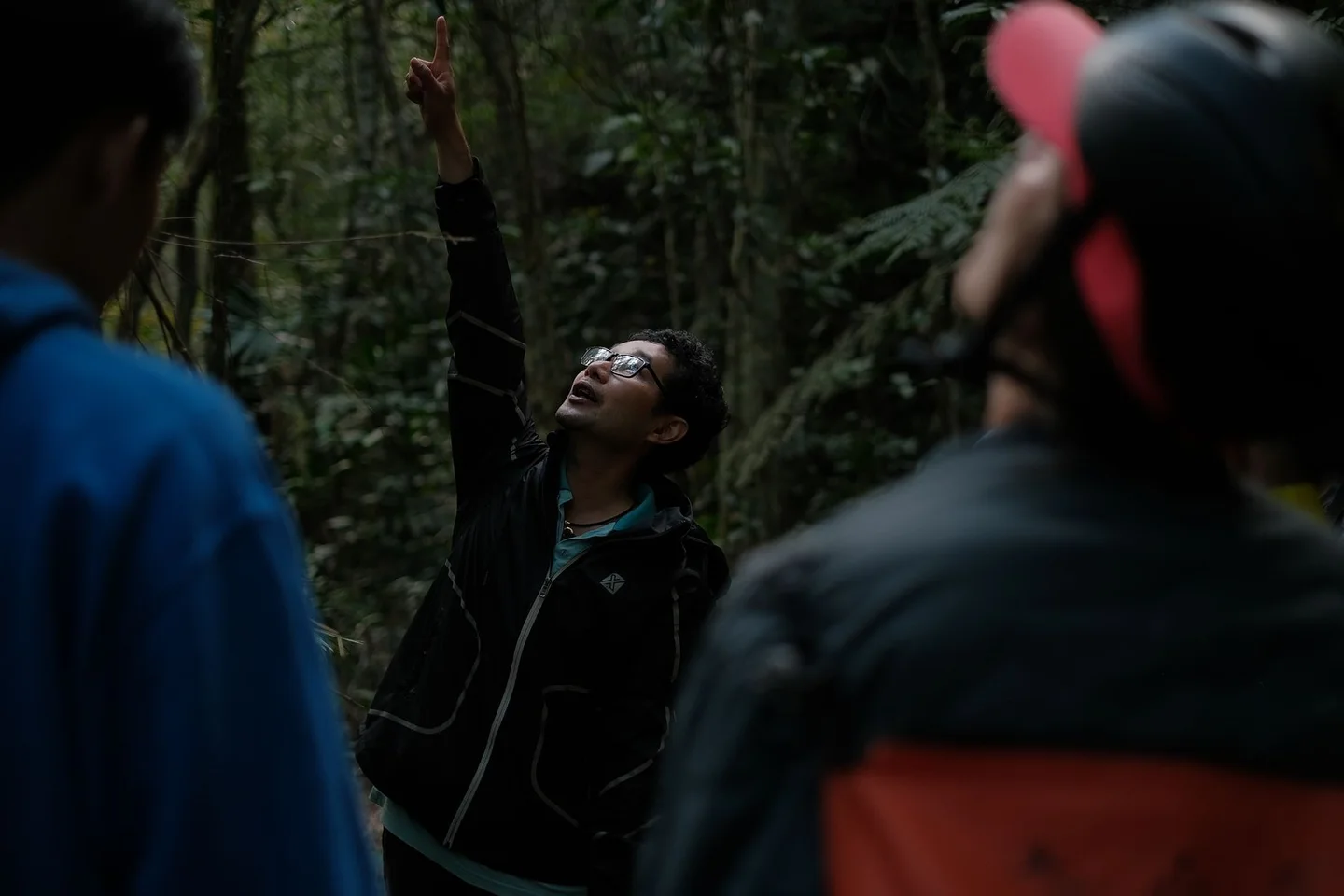
Suppose two providers advertise a three-hour nature walk. One includes a long vehicle transfer and a brief stop at a viewpoint. The other begins at the trailhead and spends most of the time interpreting a small area. Neither description is necessarily misleading, but the headline duration hides the difference. Ask for the start and finish of the guided portion, not only the overall pickup and drop-off times.
Then consider the pace of explanation. If you enjoy asking about plants, a route with frequent short stops may suit you. If you mainly want a walk with occasional context, a more continuous rhythm may be preferable. Tell the provider what interests you and listen to how specifically they respond. A tailored answer about the route is more useful than a general promise that the guide knows everything.
For a private group, agree on one shared priority before contacting the guide. Asking for wildlife, a long hike, detailed plant interpretation and a quick return in the same short session may create competing expectations. Choose the essential part and describe the others as optional. This gives the guide room to propose a coherent visit.
If the outing is shared with strangers, ask whether the advertised language and theme are fixed. You may be joining people with very different interests. A flexible attitude helps, but you should know the format you are purchasing. The booking is a conversation about how the day will be spent, not a test of how much information the guide can recite.
Compare the working details
Find out the expected group size and how questions are handled. A small group may have more flexibility, but size is not the only measure. A clear route and a guide who can explain how stops work may suit you better than an unclear promise of a private experience.
Describe any practical needs in concrete terms. Say that someone prefers a route without long stairs, needs regular seated pauses or cannot comfortably stand through extended talks. Ask for a description of the ground and stopping points. The word easy is not enough information for either side to decide whether the outing fits.
Clarify what happens if the weather changes, whether the route can be shortened and what is included in the stated price. Entry, transport and equipment may be separate. Ask who communicates changes and how you will recognise the meeting point. Save these details before travelling, particularly where mobile reception may be unreliable.
Use the visit as a conversation
A good question often begins with something visible: why are those trees spaced differently, what made that mark, or how is this land used outside visitor hours? Such questions encourage a grounded explanation rather than a general speech about nature. Allow others room to ask too.
Do not expect the guide to deliver a particular animal on demand. Wildlife observation depends on conditions and chance. A thoughtful explanation of habitat or tracks can add value even without a dramatic sighting. Be wary of activities that rely on feeding or surrounding animals for photographs.
Afterward, note two or three details you would not have understood alone. Those may be the clearest measure of what the guided format contributed. You do not need to remember every name. A better way of looking at the landscape can be more lasting than a long species list.