A child’s day bag should remain small enough to be useful after the first excited minutes. If an adult is likely to carry it for most of the outing, packing it like a miniature expedition bag creates work without giving the child much independence.
Choose a bag that fits comfortably and can be opened by its user. Let the child try it with the proposed contents before leaving. The important test is whether they can move normally and find things, not whether every pocket has been filled.
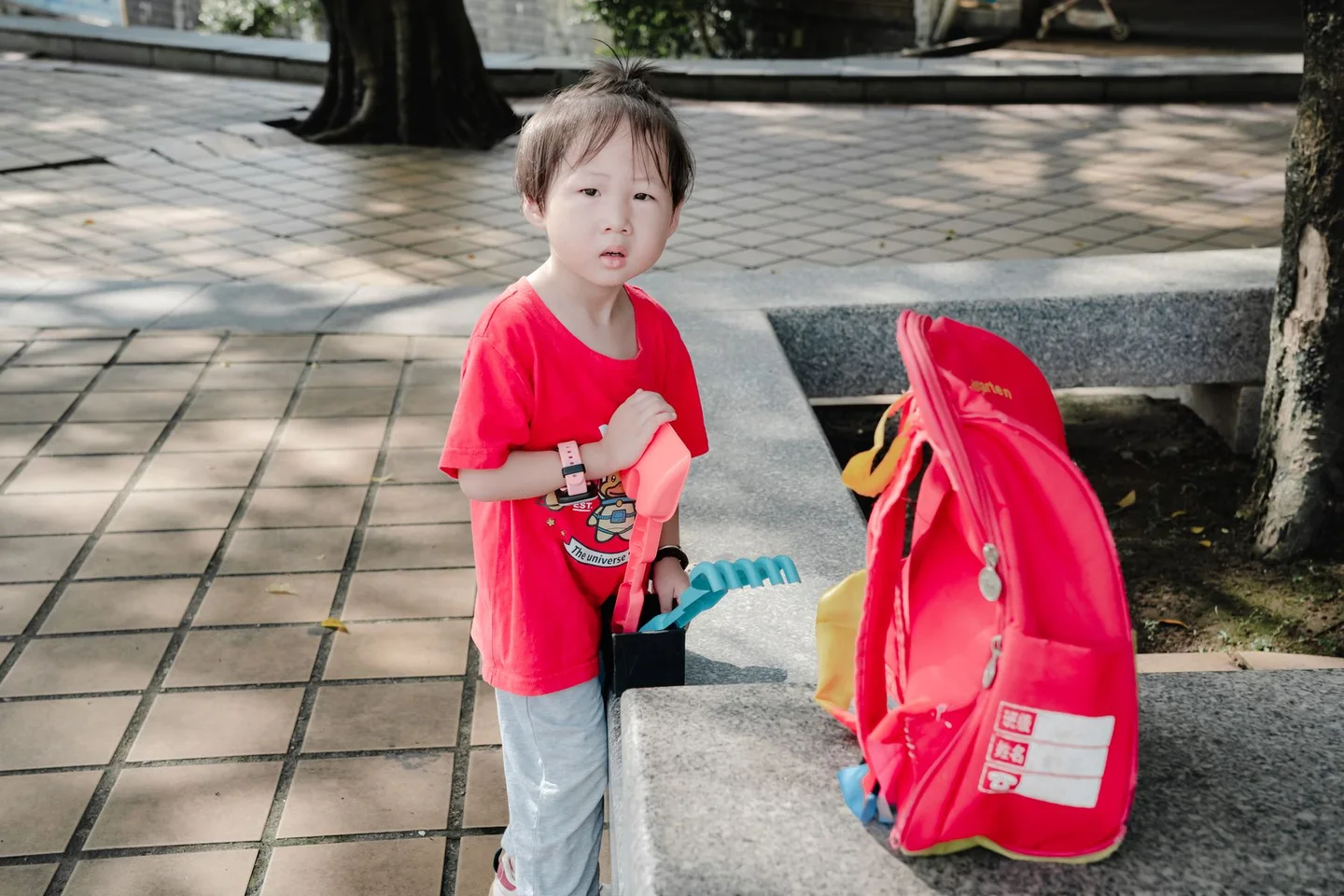
Give each item a job
Start with a few belongings the child can reasonably manage, such as a light layer, a small notebook or a familiar personal item. Adults should keep responsibility for essential documents, important supplies and anything the child cannot reliably look after.
A water bottle can be useful when its size and weight suit the child. Check that it stays in place rather than falling out whenever they bend down. Avoid adding a large bottle simply because the bag has a large pocket.
Explain where things go. One compartment for a notebook and another for a snack is easier to remember than a collection of small zippered sections. Leave space for the items to go back in without careful repacking.
Rehearse the ordinary moments
Try taking the bag off, sitting with it and putting it back on. These movements happen repeatedly at cafés, buses and entrances. A bag that requires an adult to untangle straps each time may be less helpful than it first appears.
Agree that the bag stays with its owner or a designated adult during stops. Do not rely on a child remembering something placed behind a bench or under a table in an unfamiliar place.
After the trip, empty it together. Remove food and damp items, check for anything lost and decide what was genuinely useful. Independence grows through a manageable routine, not through carrying every possible possession. A lighter bag also leaves the child freer to notice the place they came to visit.