A carrier and a stroller solve different problems on a village visit. The useful question is not which one is better in general, but which suits the child, the adults and the route you actually intend to take.
A stroller provides a place for a child to sit and may carry a limited amount of equipment in its intended storage. It also needs suitable ground, room to turn and a way through entrances. A carrier leaves the adult’s hands freer but adds a load that must be comfortable for the person carrying it.
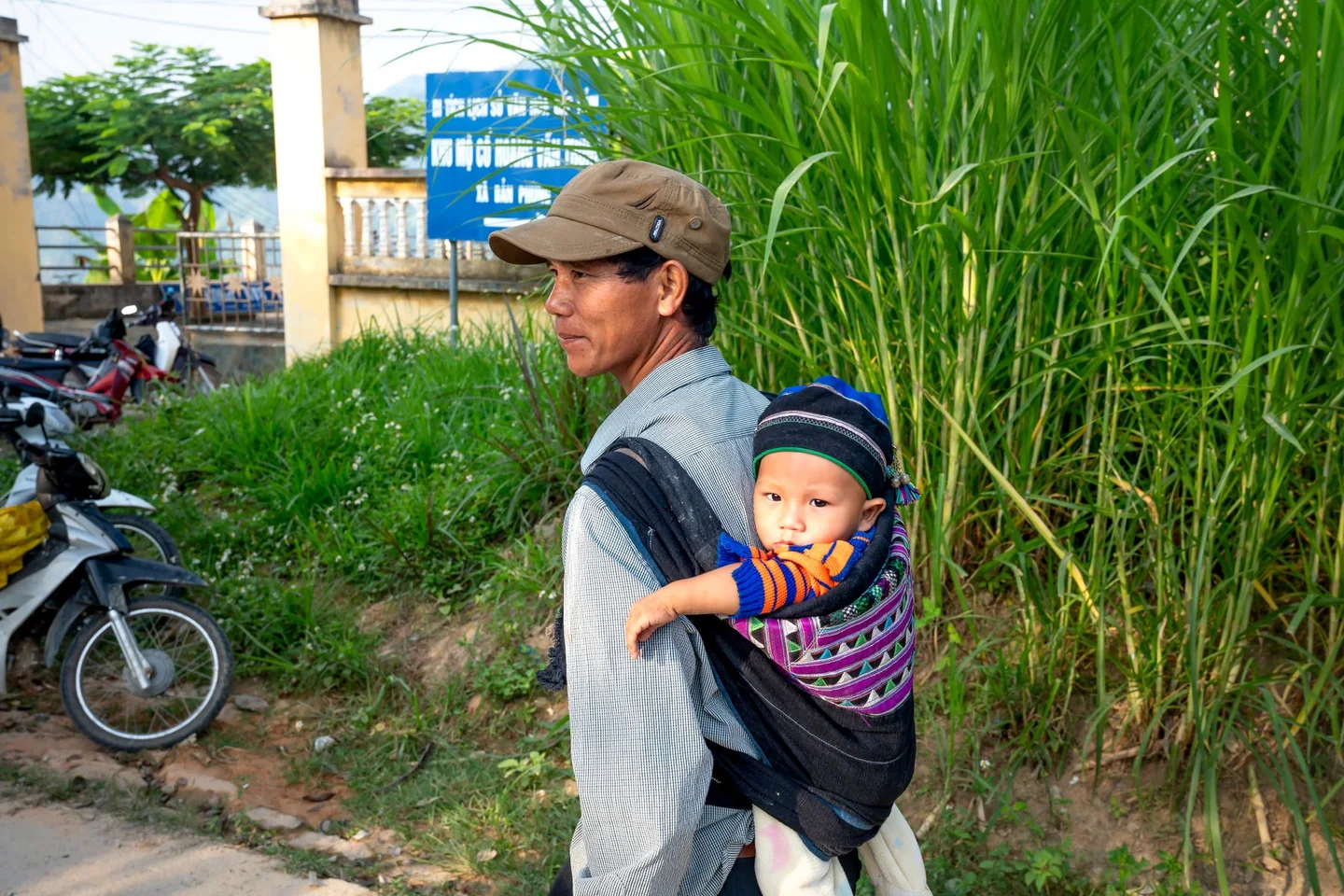
Compare the awkward moments
Imagine arriving at a small restaurant with narrow aisles. Where will the stroller go, and can it remain nearby without blocking movement? If using a carrier, how will the adult remove it and settle for the meal? These ordinary moments can reveal more about the choice than the most scenic part of the walk.
The journey to the village also matters. A folding stroller may fit the vehicle but still require careful handling at a busy terminal. A carrier may simplify boarding while leaving the adult with less capacity for other bags. Allocate the shared load around the chosen equipment, rather than adding it to the same person by default.
There is no need to maximise the equipment's use once it has been brought. If a child is happy walking in an appropriate area, let the equipment support the next transition rather than dictate every moment of the visit.
Look at the entire visit
Picture the arrival, walk, meal and return. Narrow shops, steep lanes and a crowded market may make a stroller awkward. A long level promenade may make it welcome. Neither choice removes the need to supervise the child or to follow the product’s instructions and age or size requirements.
Try any unfamiliar equipment before the trip. Adjusting straps for the first time in a busy parking area can turn a simple arrival into a prolonged stop. The adult who expects to use the carrier should try it, rather than relying on someone else’s comfort assessment.
Think about changes between adults. If two people will share carrying, check that adjustments are manageable and that both understand how the equipment works. For a stroller, confirm who handles folding and where bags go during a transfer.
Avoid carrying two solutions without a reason
Taking both can make sense when each has a defined part of the day. It can also mean pushing an empty stroller while carrying a child and several bags. Identify the transition that justifies the extra equipment before deciding.
Check storage arrangements at any venue where equipment cannot go inside. Do not assume a cloakroom accepts large items or that there is a secure place to leave them.
Whichever option you choose, reduce the route if the adults or child become uncomfortable. The equipment is there to support a manageable outing. It should not become a reason to attempt every lane and viewpoint on the map.