Follow a material rather than a monument
Tiles can provide a small visual thread through a historic district. They may cover a facade, frame a doorway or appear inside a publicly accessible courtyard. Start with one surface and notice how individual pieces form a larger pattern. A repeated tile can create lines or shapes that are not obvious when viewed alone.
Avoid calling every decorated tile Talavera or assigning an origin from color alone. Similar palettes and motifs can appear in different products. If a building's official information identifies a material or workshop, use that detail; otherwise describe the visible pattern without giving it an unsupported label.
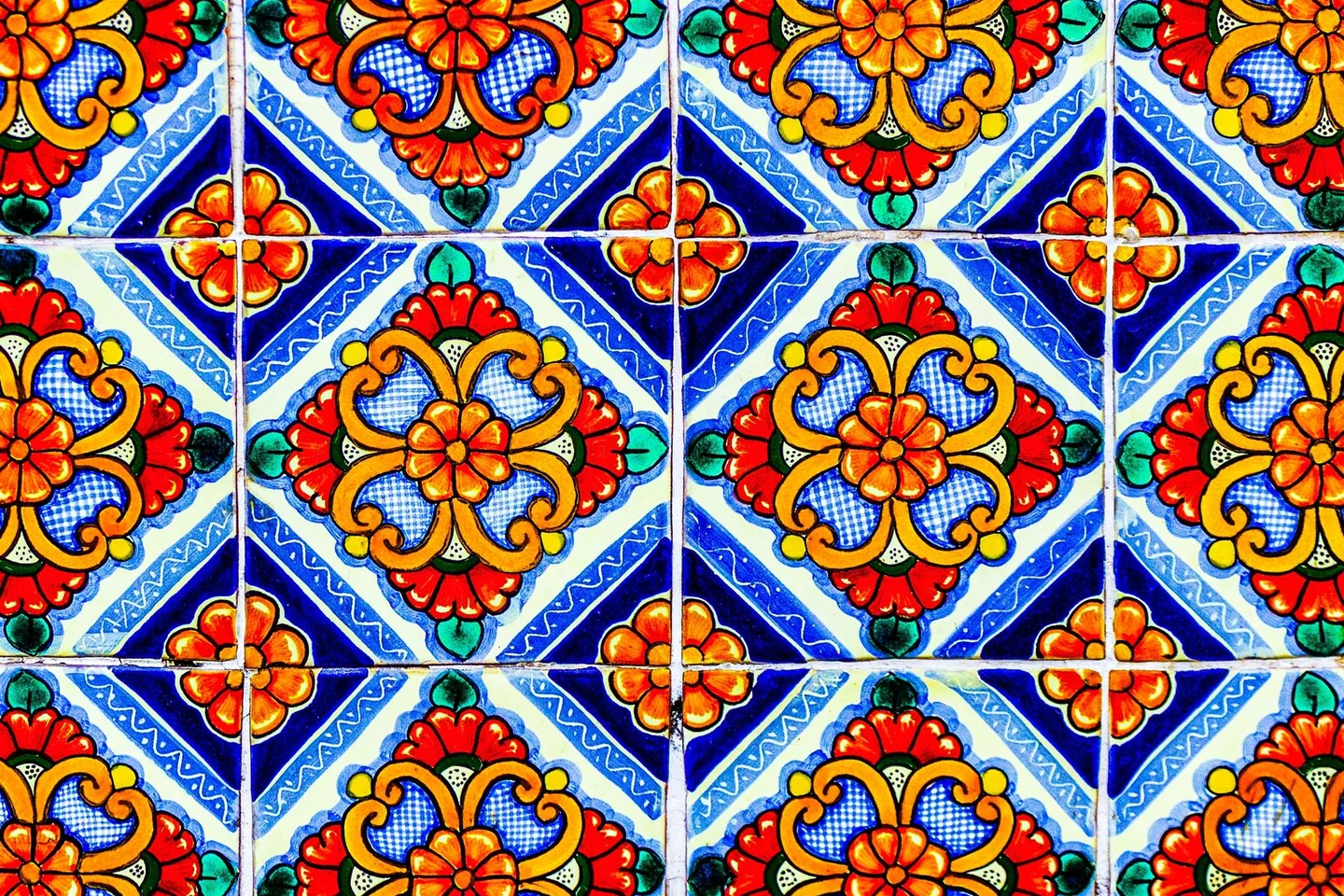
Look at repetition and interruption
Notice where the pattern begins and ends. Corners, windows and doorways require adjustments, and those transitions can reveal more than the center of a wall. Look for border pieces, changes in scale or areas where replacements differ slightly. A mismatch may indicate repair, but it does not establish when or why the work occurred.
Keep your hands off the surface, even when texture seems central to the design. Outdoor architectural finishes can be fragile, and repeated touching contributes to wear. Photograph from a comfortable public position rather than leaning across a barrier or entering a private doorway for a closer view.
If you find another tiled building nearby, compare only a few features: the size of the pieces, the amount of uncovered wall and the relationship between pattern and openings. This makes the walk specific without requiring a complete history of ceramic production.
Try separating the pattern into its smallest repeating unit. Sometimes four tiles complete a motif that looks like a single large design from a distance. In another wall, each piece carries a complete image and the border does the connecting work. Counting a small section can help you see the system without photographing the entire facade.
Where a repair is visible, compare the size and alignment as well as color. Light can make identical surfaces appear different, while dirt or weathering can disguise a genuine material change. Avoid treating one photograph as conclusive evidence. A note describing the location and the observed difference leaves a better foundation for later research than a confident claim about restoration based on a quick glance.
Bring the detail back to the street
Step away and look at the whole facade again. A pattern that felt intricate close up may read as a single color field from across the street. Notice how it interacts with stone, plaster, wood or metal around it. The tiles belong to that larger arrangement.
Keep the building's name or address with any photograph you want to research later. A close-up without context can be difficult to identify. One carefully recorded wall may give you more to remember than dozens of decorative fragments with no location attached.