Names are clues, not complete histories
Street names can turn a short walk into a set of questions. A name may refer to a person, an event, a former use of the area or a feature that no longer exists. Some streets also retain older names in conversation while the official sign uses another. Notice the wording without assuming that its meaning is obvious.
Start with a plaque at a corner and record the full name, including any number or title. A partial name can lead to the wrong person when you look it up later. If two signs differ, photograph or note both from a place that leaves the pavement clear. The difference itself may be worth investigating, but it does not automatically reveal which sign is older.
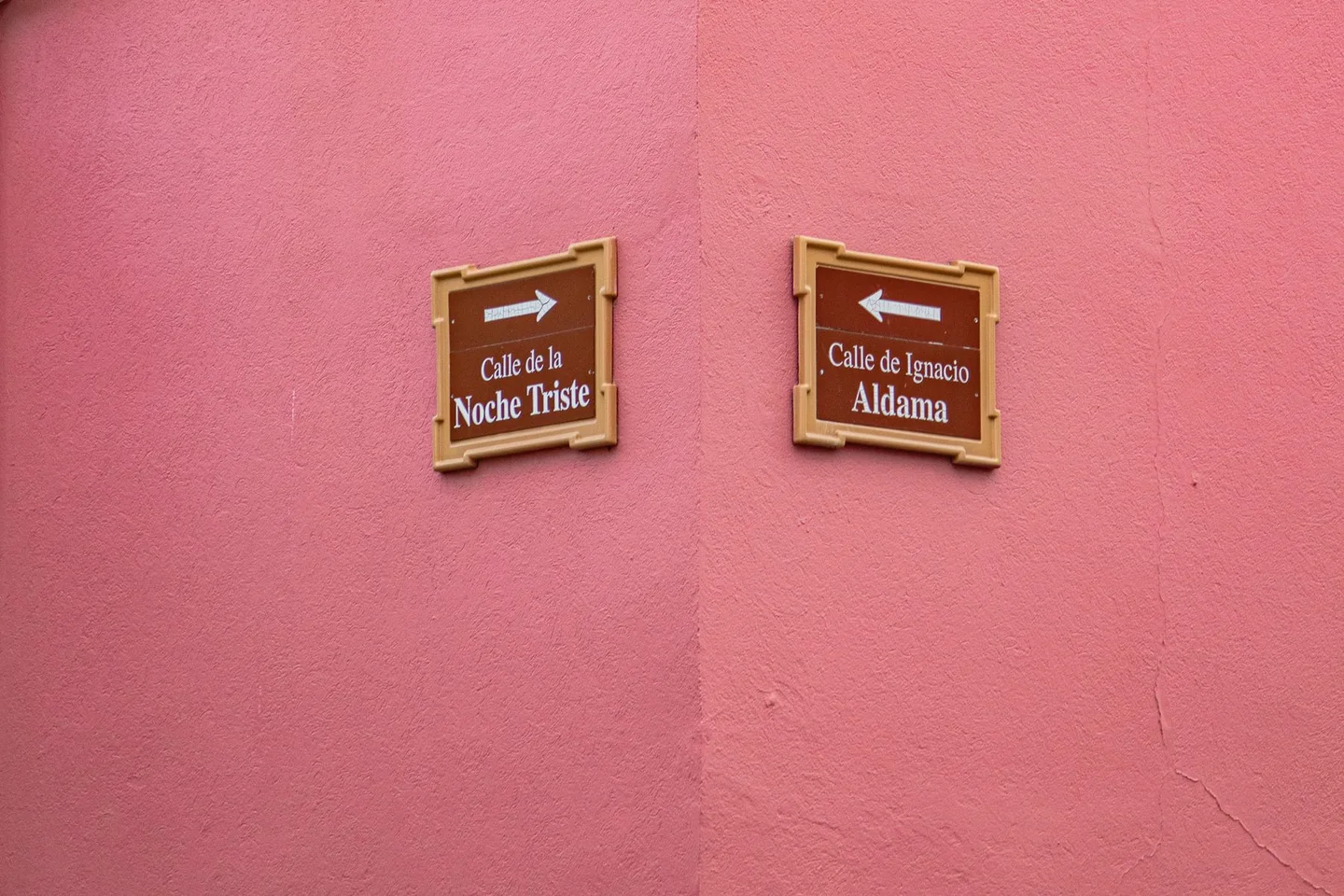
Compare the name with the street
Look for what remains visible around you. A name associated with a trade may now sit above unrelated businesses. A reference to a garden may appear on a heavily built block. These contrasts are interesting observations, but avoid filling the gap with an invented story. Urban changes are rarely explained by a single sign.
If a museum, official heritage page or municipal information panel explains the name, use that account as a starting source. A shopkeeper may share a local story, which can be valuable as a recollection without becoming a verified historical fact. Keep those kinds of information distinct in your notes.
Street names also have an immediate practical use. Say the cross streets when arranging a meeting instead of describing only a café's color or a memorable doorway. A business can move or close; a clear intersection is usually easier for everyone to identify.
Keep a small collection
Choose three names from the walk rather than trying to record every corner. Later, investigate the one that raises the most interesting question. You might discover a connection between distant neighborhoods or simply learn that the person commemorated is not the one you assumed.
The exercise does not need to produce a dramatic discovery. It changes the way you look at ordinary signs and gives the route a memory more precise than a sequence of unnamed streets.