Find a work, then look around it
Public art often sits in places you would pass anyway: a square, a broad pavement or the entrance to a civic building. Rather than collecting every sculpture on a map, choose one that makes you curious and look at how it occupies the space. Can people walk around it? Does it face an important street? Is it raised above daily activity or placed at the same level?
These questions do not require specialist knowledge. They help you notice how an object and its setting work together. The same sculpture would feel different in a quiet courtyard than beside a busy crossing. Include that setting in your attention before concentrating on the object alone.
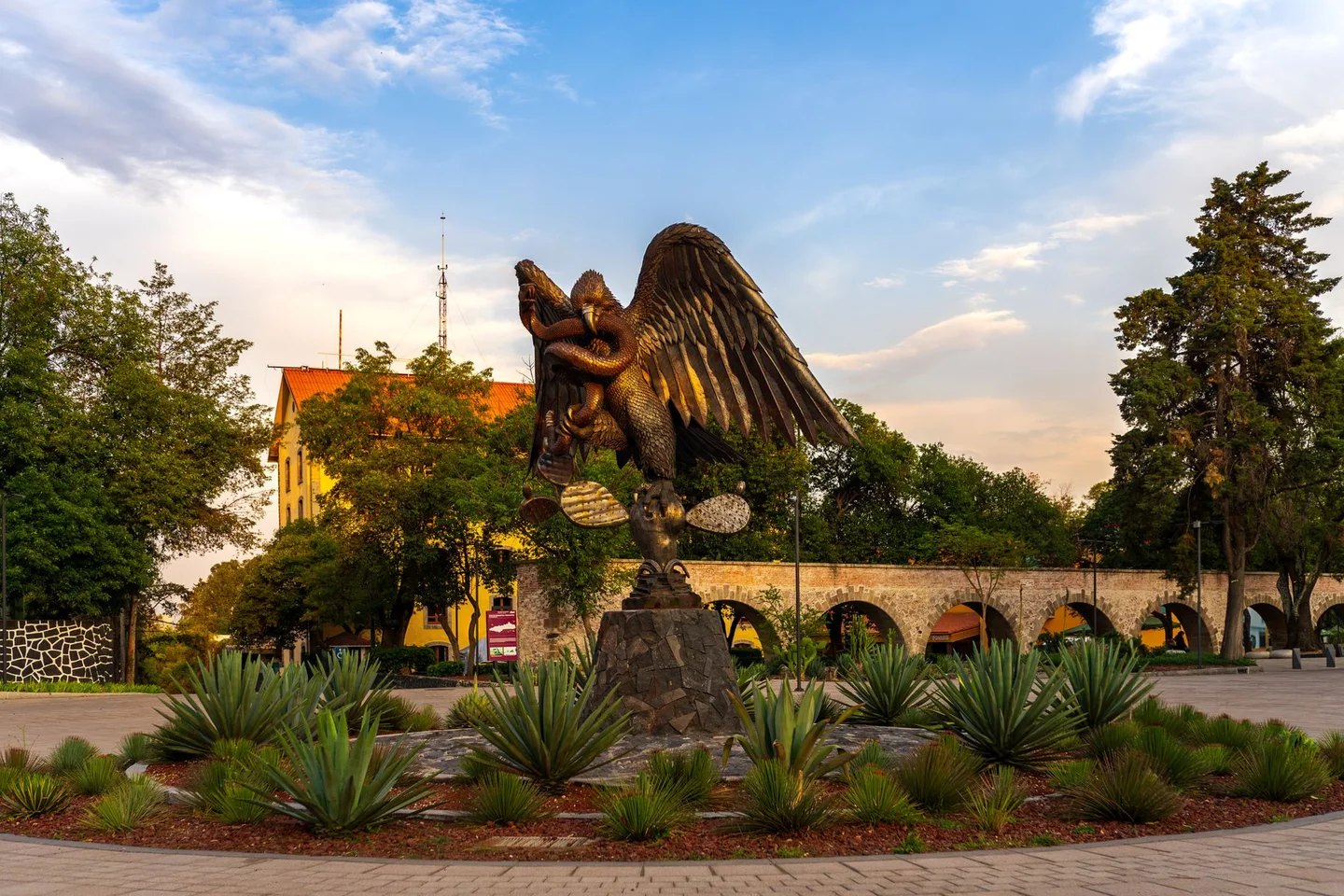
Move your viewpoint carefully
If the space allows, look from more than one side. A solid form may reveal openings, and a smooth outline may become a complex group of smaller shapes. Stay within public pedestrian areas; planting beds, plinths and barriers are not viewing platforms. Do not climb or touch a work unless an explicit invitation says it is designed for that use.
Look for a title, artist or commissioning information. Read what is provided without assuming a missing plaque means the work has no story. If you want to research it later, record the location and a clear image. Be cautious about repeating a nickname as an official title.
Some works commemorate difficult events or particular people. If visitors are laying flowers, observing silence or gathering for a ceremony, give that activity space. A monument can be a living place of remembrance as well as an object in the streetscape.
Consider the base as well as the artwork. A high plinth can separate a figure from everyday movement, while a low placement may make the work part of the pedestrian route. Inscriptions, planting and surrounding paving also influence how it is approached. None of these details alone proves what the artist intended, but together they describe the encounter available to a visitor.
If a work has become a meeting point, distinguish that present use from its original commission. Both can matter. You might learn that people refer to it by an informal name unrelated to the title on the plaque. Record the difference accurately instead of replacing one with the other. The city can give a work additional meanings without erasing the information about who made it.
Build a short connection
After spending time with one work, choose another nearby only if it adds a useful comparison. You might contrast materials, scale or the way people use the surrounding space. Two carefully observed pieces can make a richer walk than a long list seen hurriedly.
Before leaving, describe one thing the work made you notice about the city. The answer may concern the sculpture itself, but it might instead be the empty space around it or the route people take past it every day.