Look before choosing a dish
A produce or spice stall can make a later meal easier to understand. Dried chiles, herbs, grains and fresh vegetables show ingredients in forms that may disappear once they become a sauce or filling. You do not need to identify everything. Choose one unfamiliar item and ask its name when the seller has time, without handling it unless invited.
Keep the question close to what is on display. Asking how an ingredient is commonly used gives the seller something specific to explain. Asking for the secret of an entire regional cuisine is less likely to produce a useful answer. A market conversation can introduce a detail, but it does not make one person's explanation universal across a whole region.
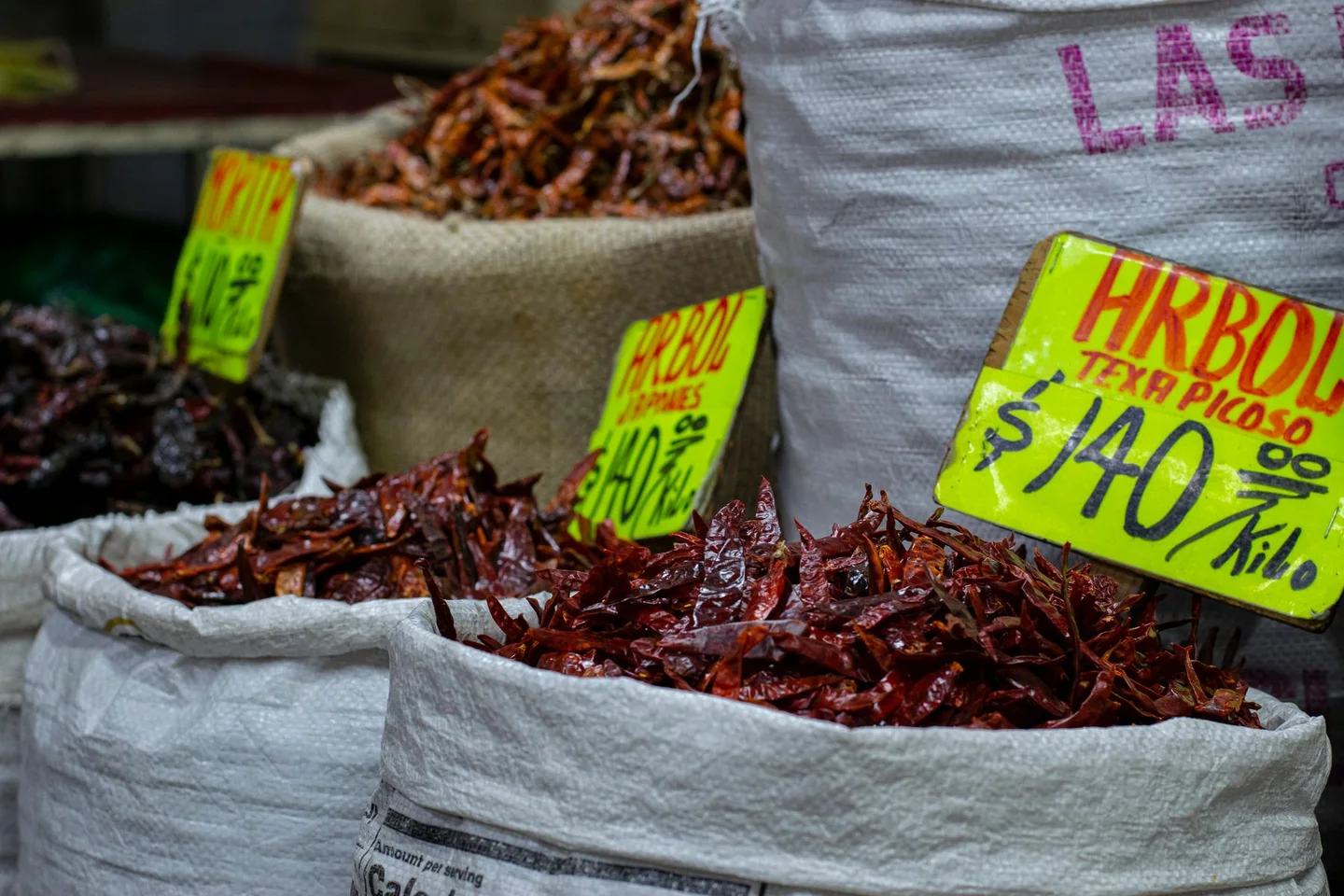
Compare forms rather than judging appearances
The same ingredient may appear fresh, dried, ground or prepared in a mixture. Ask whether the name changes with the form and what that means for its use. Color alone is not enough to identify flavor, heat or composition. Two similar-looking powders can have very different ingredients, and a darker chile is not automatically stronger than a lighter one.
If you intend to buy something, explain how you will use it and how long it must travel. Packaging suitable for a short trip across town may not suit a long journey in a bag. Ask for the product name and storage guidance, and check the applicable destination rules separately before carrying food across a border. The seller cannot be expected to know every country's entry conditions.
Photographs can help you remember the display, but ask before taking close images of a stall or its workers. A written name is often more useful than a picture of an unlabeled pile. Keep the aisle clear while making notes.
One useful comparison is a whole ingredient beside its prepared form. Ask whether the ground product contains only that ingredient or a mixture. This matters both for cooking and for understanding the dish you later order. A pile of red powder cannot be identified reliably by color, and the name written nearby may describe a style of mixture rather than a single plant.
If the seller offers a taste, follow their serving arrangement instead of helping yourself from a display. Declining is fine, especially when you do not know the ingredients. A market visit can be informative without sampling every item. Keep hands and personal belongings away from exposed goods while you talk, and step aside when another customer needs the counter.
Carry one question to lunch
When ordering, notice whether the ingredient appears in the dish or its accompaniments. Ask how it is used rather than assuming the visible version at the stall matches the finished food. A sauce may combine several components that are difficult to distinguish by sight.
The aim is not to master a cuisine in one morning. Recognizing one ingredient and its role can make the meal more specific, and give you a better question for the next market visit.