Look before reading
Try giving the first work in a gallery a little attention before reading its label. Notice what draws your eye and where it moves next. You do not need the correct interpretation to begin. Looking first makes the information on the label answer a question you already have, rather than replace the encounter with a summary.
Then read the title, maker and date. If the label offers context, return to the work and see what changes. Perhaps a material matters more than you expected, or a small detail now connects to the larger subject. This back-and-forth is often more useful than photographing the label and moving immediately to the next piece.
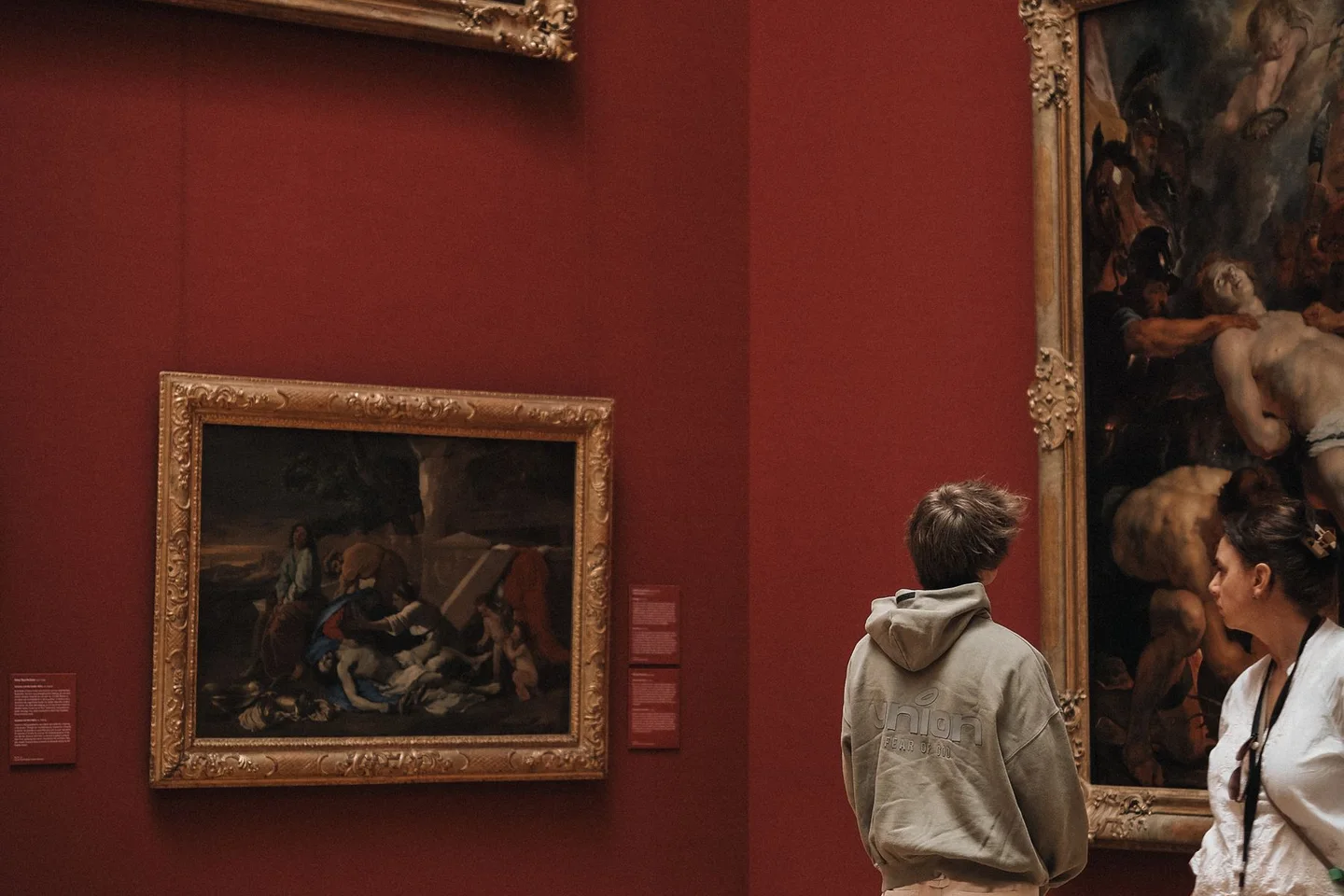
Choose a few works to stay with
A room can contain more than you can take in carefully. Select two or three works that provoke different responses: one you enjoy, one you find puzzling and one that seems unlike its neighbors. Spend enough time with each to name a specific detail. This gives the visit variety without requiring equal attention to everything.
Keep some distance when viewing larger work, then move closer only as the gallery permits. Never lean on a wall, barrier or display case to steady yourself. If the room is busy, make room for other visitors and return later rather than trying to hold the best viewing position indefinitely.
Use photographs sparingly
Check the room's photography rules before taking out a camera. Permission can differ between exhibitions in the same building. Where photographs are allowed, make them for a purpose: an object you want to research or a detail you want to remember. A phone full of complete walls is not necessarily a useful record.
Before leaving, compare two works you noticed. What changed between them: scale, texture, mood, subject or your own reaction? You might write a short sentence in your notes after stepping out of the viewing area. It does not have to sound like an art review. A plain observation such as remembering a dark foreground against a bright doorway is enough. The aim is to leave with a few encounters you can still picture tomorrow.