An opening in the street
A courtyard can change a city walk without adding another major attraction. Beyond a doorway, traffic noise softens and the proportions of a building become easier to understand. Before stepping through, establish whether the space welcomes visitors. A restaurant entrance, museum reception or clearly marked public passage gives you a different invitation from an open residential gate.
Do not follow another person inside simply because the door is open. Look for a sign or ask at reception whether you may enter the courtyard. Some spaces welcome diners but not casual sightseeing; others allow visitors only during particular activities. Accepting that distinction keeps a small architectural discovery from becoming an intrusion.
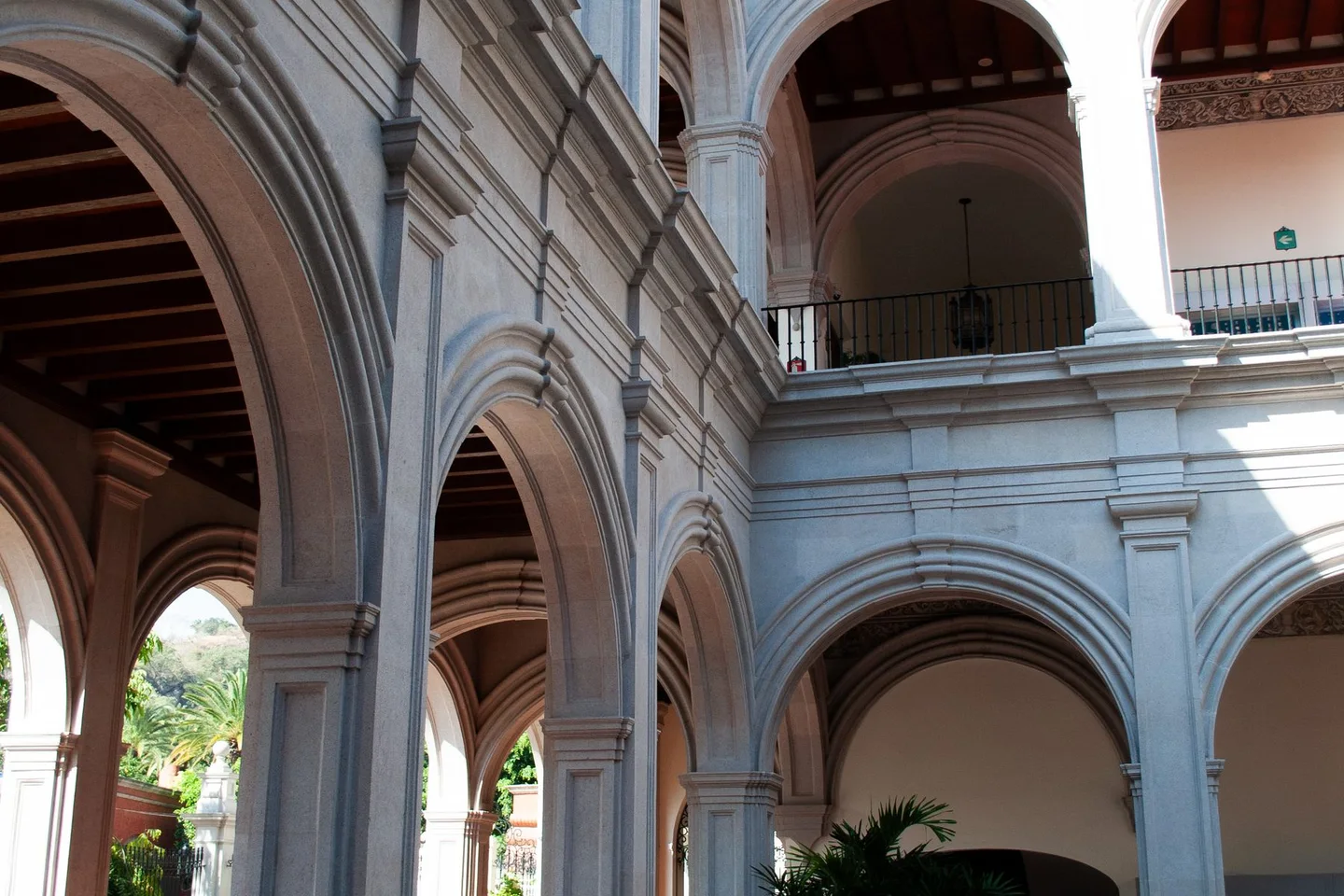
Look at how the space works
Once inside, notice what surrounds the open area. Are rooms reached through an arcade? Does a staircase lead to a gallery? Is there planting, a fountain or simply empty paving? These details explain how people move through the building. They also help distinguish a courtyard used for circulation from one arranged mainly for sitting.
Avoid assigning an age or original purpose from appearance alone. An old-looking surface may be restored or newly installed, while a plain section may preserve something earlier. If a building has an information panel, use it to connect the visible details with documented history. Otherwise, describing what you can see is enough.
Choose a place to stand that leaves doors, stairs and service routes clear. In a restaurant courtyard, ask before photographing occupied tables. In a museum, check whether the same photography rules apply outside the exhibition rooms. An open roof does not make the entire space unrestricted.
A pause with a purpose
If seating is available for visitors, stay long enough to notice the light and sounds. You may hear a kitchen, footsteps in an upper corridor or water that was inaudible from the street. These ordinary details give the courtyard its character more than an empty photograph does.
When leaving, return through the permitted visitor route. A tempting side door may lead to offices or homes. Keep the building's name in your notes if you want to learn more later; there is no need to explore every corridor to make the stop worthwhile.