Let the shelves change the route
A bookshop can reveal a city through subjects that do not appear on a sightseeing list. Local history, photography, independent poetry or illustrated books may show which stories people are publishing and reading. Choose a shop because its collection interests you, then allow enough time to browse rather than treating it as a doorway to photograph.
Check whether it sells new books, used books or a more specialized selection. Those are different browsing experiences. A used-book shop may reward looking slowly through an uneven shelf; a specialist shop may be best approached with a question. If opening details are uncertain, have another nearby stop in mind without making the entire afternoon depend on that one door.
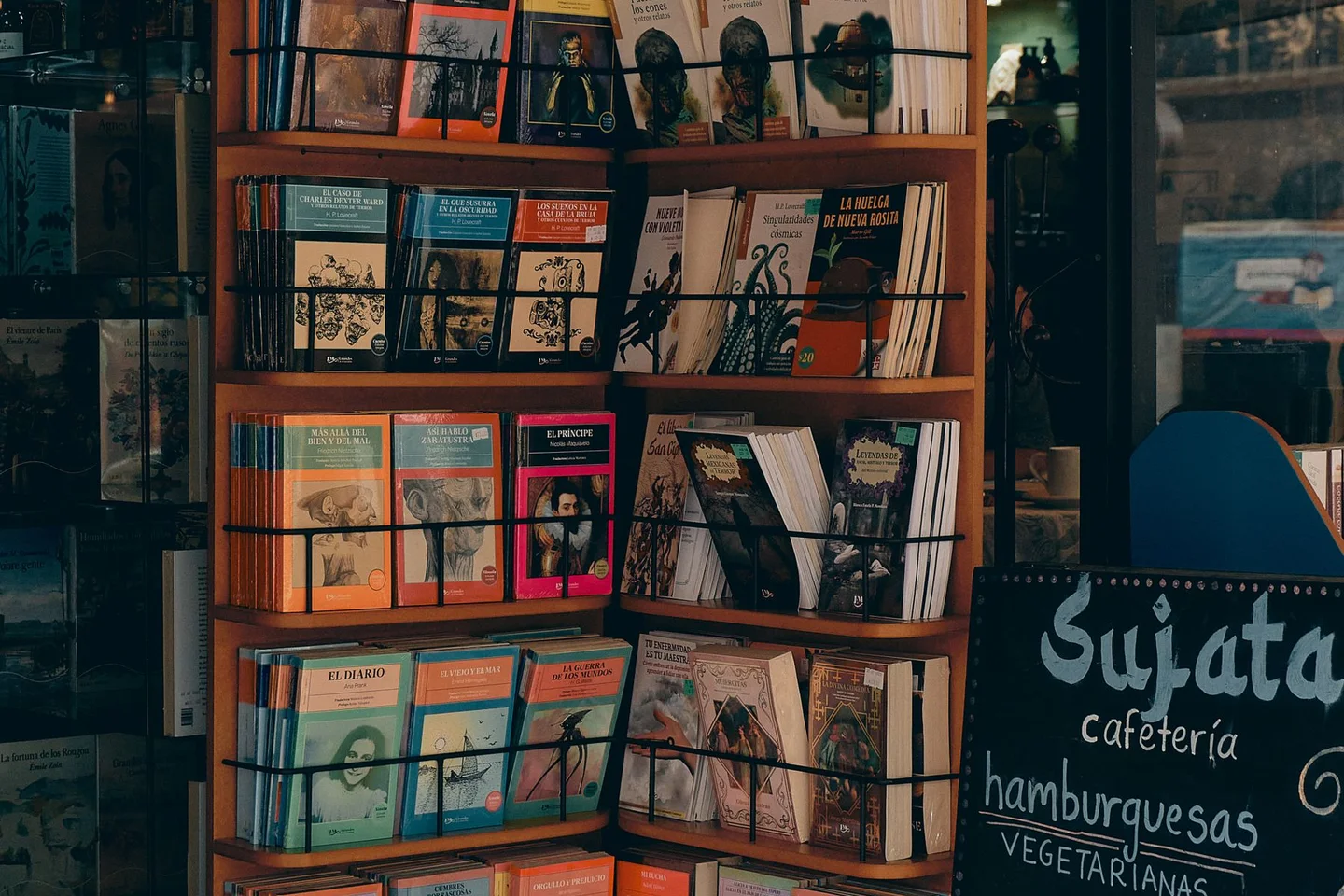
Ask a question a bookseller can answer
Instead of asking for the best book about Mexico, narrow the request. You might want a photographic book about the city, a short work by a local writer or something readable in the language you are learning. Mention your preferred format and price range. A clear question gives the bookseller room to suggest something beyond the most obvious souvenir.
When handling older volumes, support the cover and avoid forcing a stiff spine flat. Keep drinks away from the stock, even in a shop with a café. If a book is wrapped or kept behind the counter, ask before opening it. These small habits matter more than knowing the specialist vocabulary of publishing.
For a book in a language you read slowly, try a paragraph before buying. Beautiful production does not guarantee that the text will suit you. Equally, a slim volume you can finish may become a more useful reminder of the visit than a heavy book chosen only for its cover.
For a local-history book, look at the publication information as well as the cover. A reprint may reproduce an older view of the town, while a recent guide may focus on current visitor information. Both can be useful for different reasons. Ask which kind you are holding rather than assuming that a newly printed book describes today's streets.
If you are choosing a gift, consider the reader rather than only the place you visited. A bilingual illustrated title may be easier to share than a dense specialist history, while someone with a particular interest may prefer the latter. Read a sample page and inspect the image quality. The best gift is a book the recipient can actually use, not simply the one that most loudly announces the destination.
Think about the journey home
Consider weight and protection if the purchase will travel in a day bag. Ask whether a simple wrapping is available and keep the book away from a damp bottle or food container. Large art books may need a different plan than a paperback; check delivery possibilities directly rather than assuming the shop ships internationally.
You can leave without buying if nothing fits. If a title interests you, note its author and full name before returning it to the right place. End the visit by choosing a nearby place to read a few pages if you did buy something. The bookshop then becomes the start of a pause, not another completed stop.