Give the walk one visual theme
Architectural walks can become frustrating when every building seems to demand a date, a style and a famous name. Begin with something you can see directly. Doors, balconies, rooflines or the meeting between old walls and new additions offer enough material for a short route. You can investigate the historical labels afterwards.
Choose a few adjacent blocks instead of linking distant landmarks. Repeated details become more interesting when you can compare them close together. A narrow balcony on one house may reveal something different beside a broad commercial frontage than it would in isolation. The street itself is part of the subject.
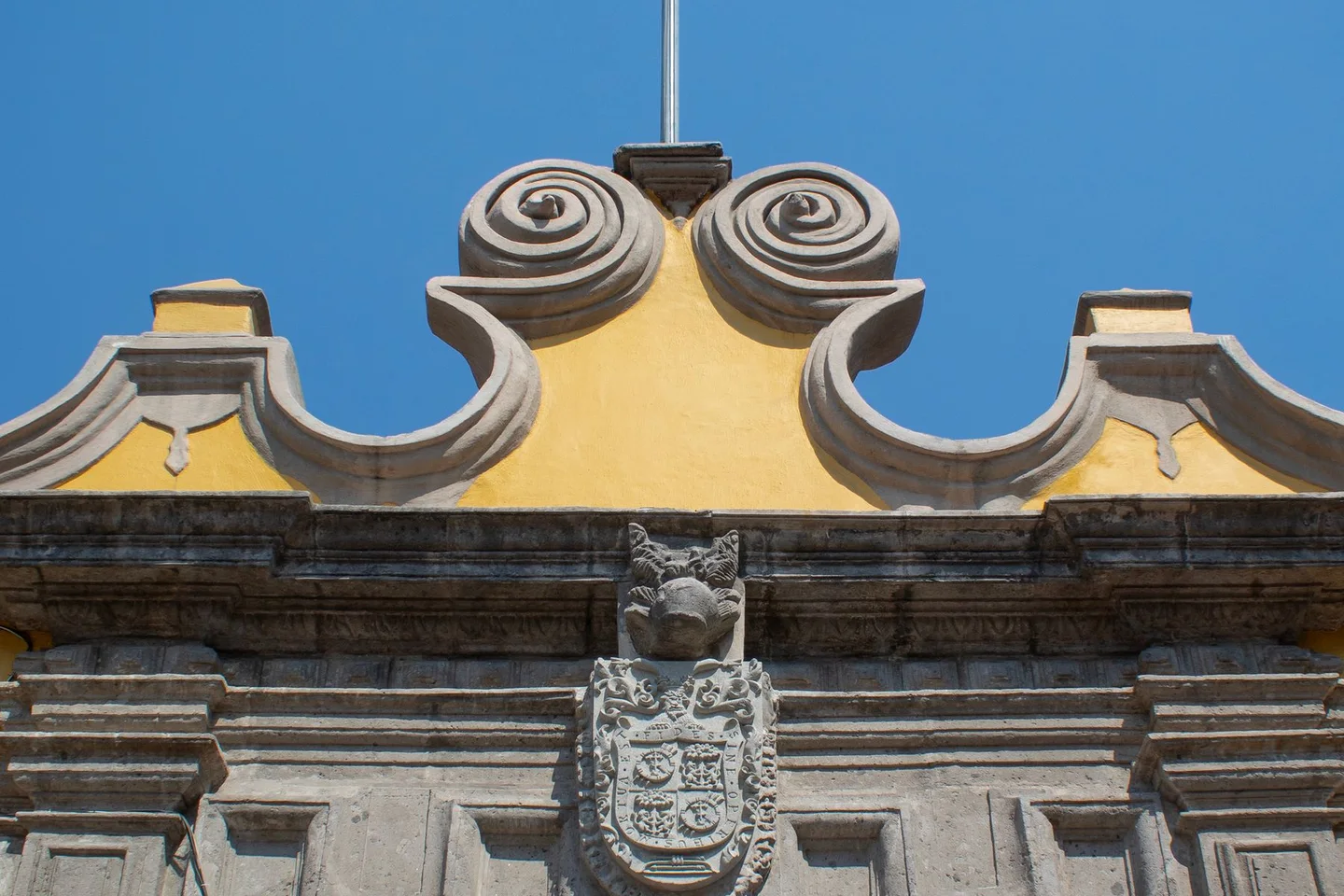
Compare, then describe
Look first at the building's relationship with the pavement. Does it meet the street directly, sit behind a garden or create shelter beneath an overhang? Then notice how the ground floor differs from the upper levels. A former doorway may have become a shop window, or a modern sign may conceal part of an older opening. Describe these changes without assuming you know when they happened.
Materials give another useful comparison. Stone, plaster, brick, wood and metal weather differently, but weathering alone is not a reliable date. Repairs can make a surface look younger, and decoration can imitate another material. Where a plaque identifies a building, record the wording or name so that later research begins with something specific.
A notebook sketch can be very rough: the number of openings, a roof shape or a line showing how an arcade meets the street. Drawing forces you to notice relationships that a quick photograph may miss. Keep yourself clear of entrances while doing it.
Try one block in two directions
Walk the same short block back in the opposite direction. The light and the sequence of views will change, even though the buildings do not. A projecting balcony that was hidden on the first pass may become the main feature from the other side. This is a useful way to get more from a small area without continually adding distance.
Compare the public ground level with the upper facade. A building may appear symmetrical above while the shopfront has been adapted to an irregular entrance. Note that difference as an observation. To explain when it occurred, you would need evidence beyond the present surface. An old photograph with a reliable date can be especially useful for a narrow comparison, but make sure it shows the same building and viewpoint.
If you sketch, use simple proportions rather than trying to reproduce ornament. Draw the overall rectangle, mark the main openings and add one detail that changes the composition. This can reveal why a doorway looks unusually tall or why a row of windows creates a particular rhythm. The sketch is a tool for seeing, not a souvenir that needs to impress anyone.
Keep private interiors out of the exercise. An open window may help explain the depth of a wall, but it is not an invitation to photograph the room beyond. Architecture is occupied space, and a careful walk respects the people who use the buildings you are studying.
End with a pair of buildings
Before finishing, choose two facades and explain one difference between them in ordinary language. Perhaps one gives the street shade while the other exposes the pavement, or one repeats small windows while the other centers everything on a large doorway. This is already an architectural observation.
If you want to explore further, look for the building or district in official heritage information. Do not turn a resemblance into a confident historical claim. A walk can be thoughtful and enjoyable even when some questions remain unanswered.