What will you actually do?
A workshop visit may mean watching someone work, hearing an explanation and looking at finished pieces. A hands-on class asks you to spend time learning and making. Both can be worthwhile, but they occupy a day differently. Clarify which one is being offered before placing it between other stops.
Ask for a plain description of the session. Will you observe a demonstration, try one stage or complete a small project? How much time is devoted to explanation and how much to working? A photograph of a visitor holding a tool does not tell you whether most participants actually use it or whether the image shows a special session.
A short demonstration can fit a town walk. A class usually needs a more definite commitment, including arrival, preparation and cleanup. Leave enough time for the full arrangement rather than assuming the advertised activity duration covers everything. If you need to catch transport afterward, explain that before booking.
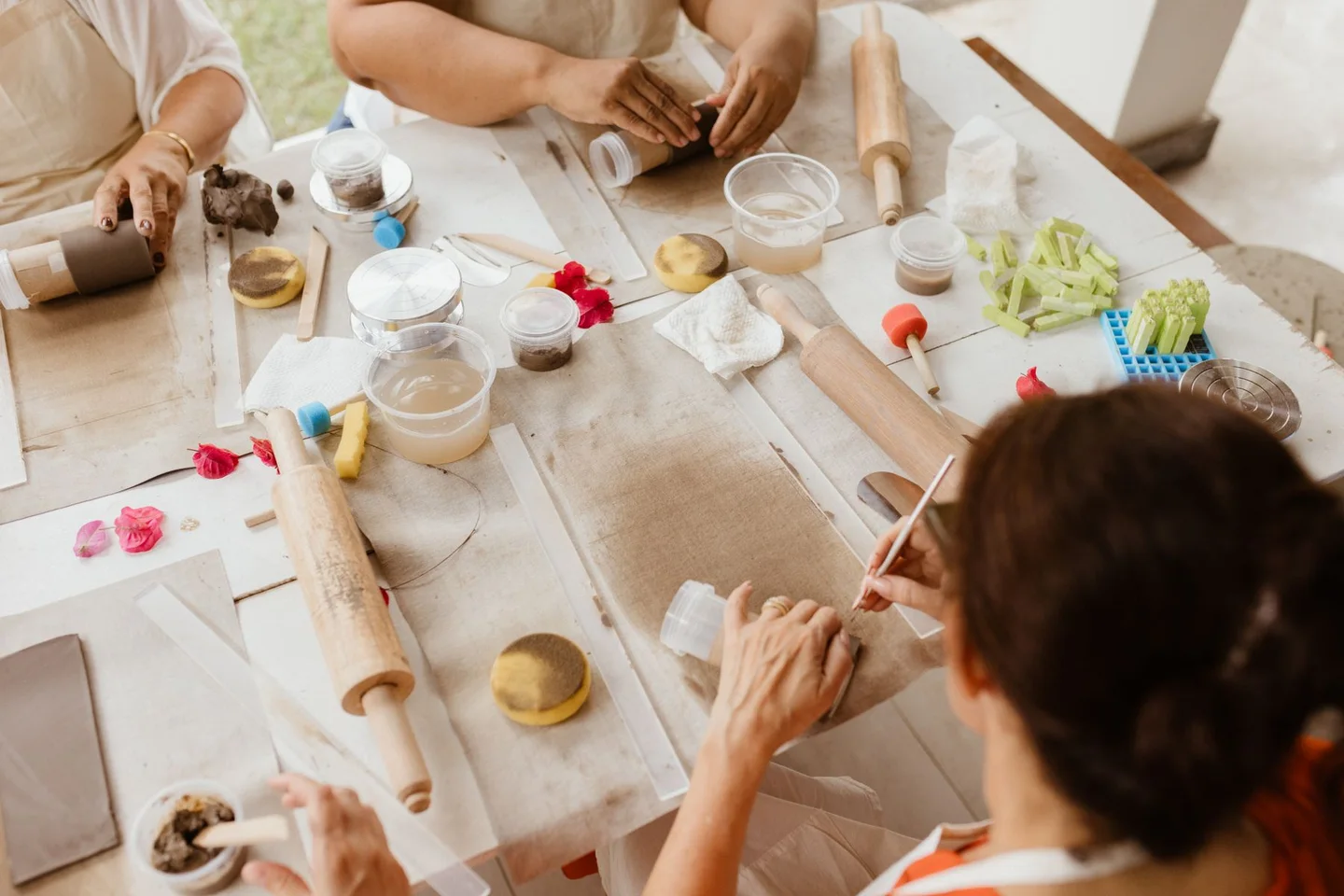
Compare the learning arrangement
Find out who teaches, the language used and how many participants share the space. Ask whether the activity is intended for complete beginners and what level of assistance is provided. A small group may allow more individual attention, but the important point is how the session is organised, not the number alone.
Describe the people attending. If children are included, ask about the specific activity and any participation requirements. Do not assume that an adult class automatically adapts to younger visitors. Equally, a class advertised for families may use a simplified project that an experienced participant finds less interesting. Matching the format matters more than choosing the most impressive finished example.
Ask what materials and protective items are supplied and what clothing is appropriate. Follow the host's instructions around tools and working areas. A visitor activity takes place within someone's workspace, so keep bags and movement where directed. Permission to participate in one task is not permission to handle other equipment.
The finished object may need another step
Before choosing a class because you want a souvenir, ask what you will take away that day. Some activities produce a finished small piece; others demonstrate a stage whose later processing happens outside the session. The answer depends on the material and the particular workshop. Do not assume that an object visible at the end is ready to travel or use.
If collection or shipping is offered, clarify who arranges it, the expected process and the separate cost before committing. A piece that requires a return visit may not fit a one-day excursion. Photograph your work if permitted and keep any identification the workshop uses to match it to you.
Compare this with the observation-only option. Watching a skilled maker explain a process can offer more understanding than a rushed attempt to produce something while worrying about departure. If you mainly want context and conversation, the visit may be enough. If you want the experience of learning through your own hands, give the class the space it requires and let the rest of the day remain simple.