Look beyond the outline
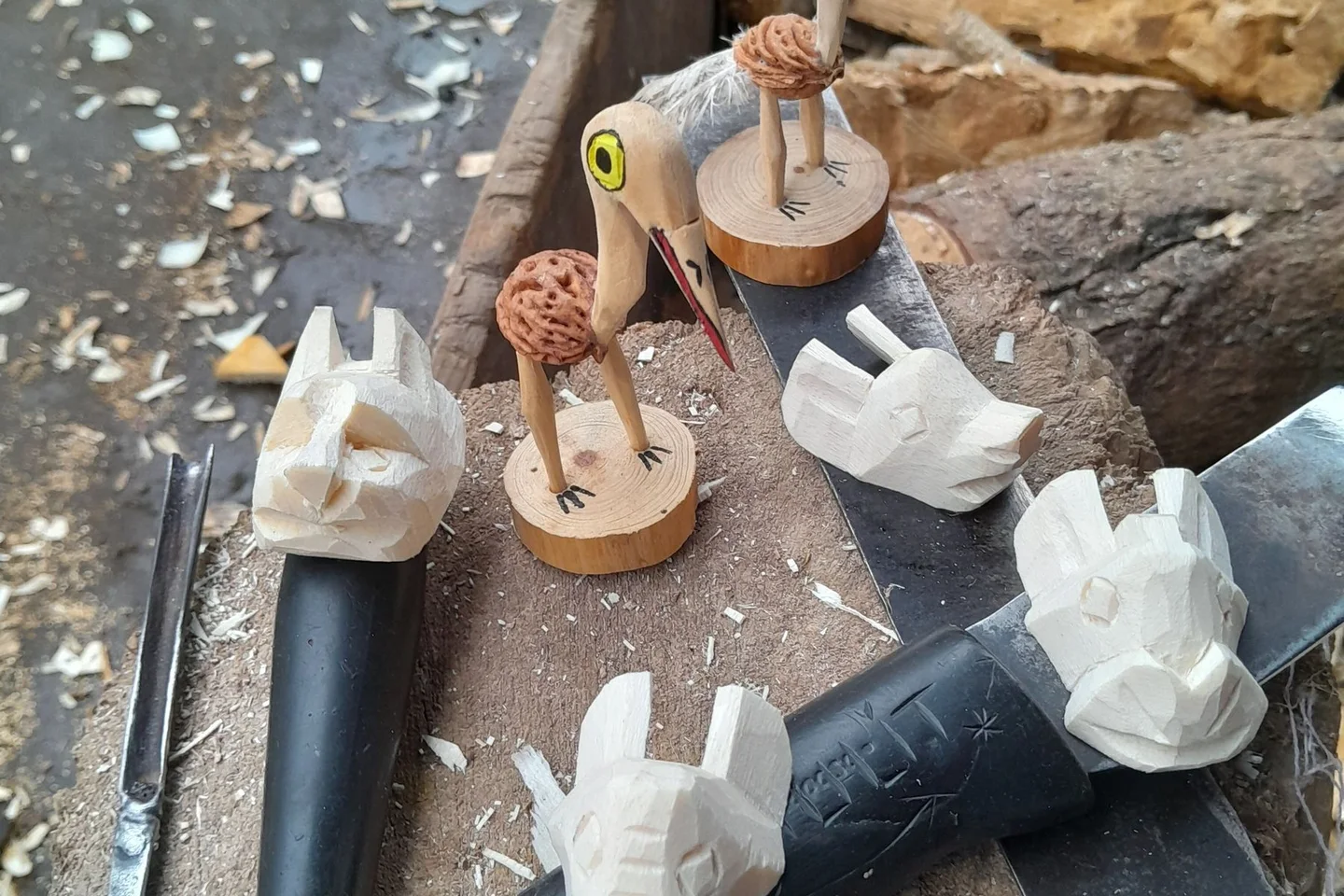
A carved wooden object may seem sturdy because its main body is solid, while the most distinctive parts are delicate. Ears, wings, tails, fingers or thin decorative projections can determine how it must travel. Look at the complete shape before deciding that it will fit safely in a bag. The widest point may be far from the base.
Ask which parts are carved as one piece and which are attached or removable. Do not pull on anything to find out. The maker may have a particular way to separate and pack components, and a join that looks temporary may be fixed. If the piece comes apart, ask to see the correct method and record the arrangement before it is wrapped.
Inspect the surface in good light
Notice the finish, painted details and areas where the wood remains visible. Ask about any cracks or changes in the surface without assuming their meaning. Wood can show natural variation, but that does not remove the need to understand the condition of the actual item. If another version is supplied, inspect that one too.
Ask who carved and who painted the piece when those roles are relevant. A workshop may divide the work among several people. Clear credit is more useful than an oversimplified story of one person making every part. Keep names and workshop details if they are offered, especially when the purchase has a distinctive design.
Avoid assigning a cultural meaning to an animal or pattern solely from its appearance. If the maker explains a meaning, note whose explanation it is. Designs can reflect individual choices as well as shared traditions, and not every decorative detail needs to be translated into a fixed symbol.
Packing should protect the vulnerable parts
Ask how the object should be supported so pressure does not fall on thin projections. Separate removable components as instructed and keep them identifiable. A loose small part can disappear inside wrapping, so check the full set before leaving. Photograph the assembled object with permission if it will help you put it together later.
Consider the rest of the day's purchases. A carefully wrapped carving can still be damaged if a heavy bottle or book presses against it. Plan a stable place for it rather than relying on the softness of a cloth bag. If suitable transport is not possible, a smaller or less fragile piece may be a more realistic choice.
For international travel, check the destination's current rules for the material before purchasing. Finished wood products and other plant materials can be treated differently, and you should not rely solely on a seller's general assurance about travel.
Display it as the maker intended
Ask about dusting, light and moisture for that specific finish. Do not apply household polish or a cleaning mixture without knowing whether it suits the surface. Painted details may need different care from uncoated wood.
Once home, choose a stable display position where projecting parts are unlikely to be caught by sleeves, curtains or other objects. The work deserves a place that respects its physical shape, not just a shelf where its colors look good.