Shelter shapes the walk
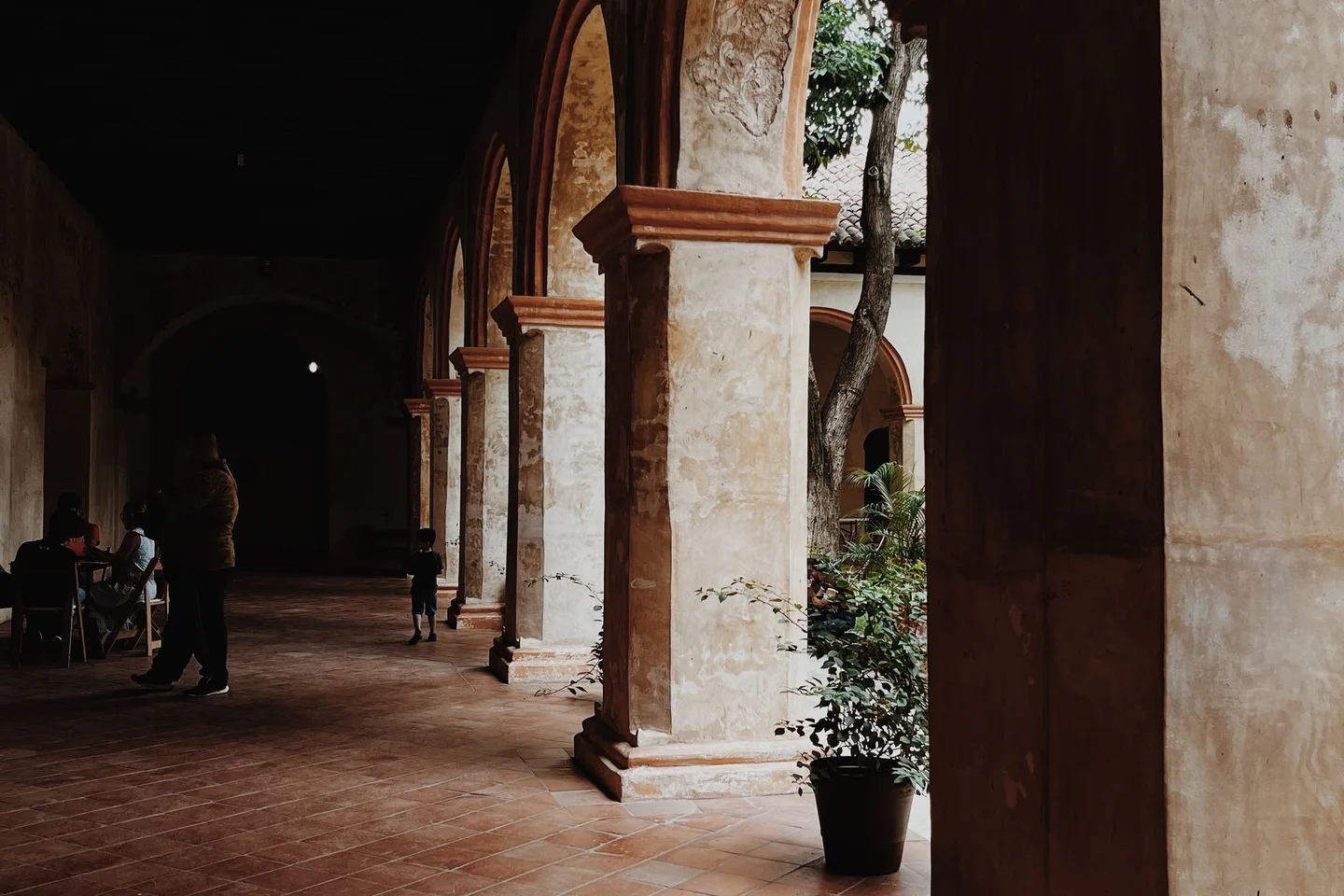
Portales make a town square feel different at pavement level. The arcades create a sheltered edge where shops, restaurants and entrances can share one continuous passage. From the middle of the plaza they may look like a decorative border; walking beneath them reveals how much ordinary activity happens between the building and the open square.
Begin at one end and move slowly enough to notice the changes. The width, height and rhythm of the openings may vary. Some sections hold tables, others remain clear for circulation, and another may lead into a courtyard. Do not assume that the entire arcade belongs to one business or offers the same kind of access.
Keep the passage working
A shaded walkway is attractive to visitors precisely because it is useful to everyone. Leave room for people carrying shopping, making deliveries or moving between doorways. When stopping for a photograph or reading a menu, stand to the side rather than in the narrowest space between a column and a table. If the passage is busy, continue to a wider point.
Restaurant furniture can make the boundary between public passage and customer seating unclear. Ask before using a chair, even if it seems conveniently placed for watching the square. A bench provided for the plaza and a chair at a café do not have the same arrangement. You can enjoy the arcade without occupying a business's seating.
Watch how rain or strong sun changes the use of the space. More people may gather under the same shelter, and a previously easy route can become crowded. Keep your group together without spreading across the passage. The architectural advantage of shelter also brings a responsibility to share it.
Look at the connection with the square
Pause where you can see both the arcade and the open plaza. The columns frame changing views as you move, making one square appear in a sequence of smaller scenes. Notice which entrances line up with paths across the plaza and where people naturally cross between the two spaces. This can explain the town's movement more clearly than a formal description of the architecture.
Do not infer the age of every section from a uniform facade. Repairs and later construction can preserve a common rhythm. If a plaque or official local account explains the portales, use it for historical claims; otherwise keep your observations about visible form and present use. The walk remains interesting without a precise date for every arch.
For a photograph, consider including the depth of the passage as well as the view outward. Wait for a suitable moment without asking everyone to clear a working public space. People using the arcade are part of its current purpose, although close portraits still need consideration and permission where appropriate.
Choose a pause beneath the arches
After walking the section, decide whether to sit at a café, enter an open shop or return to a public bench in the square. Each gives a different view of the same place. A modest meal or drink can justify a longer pause if the business suits your budget and interests.
You need not continue around every side of the plaza. One carefully observed stretch can reveal the relation between shelter, commerce and public life. Leave knowing where the passage leads and which part you would return to, rather than counting the arches you managed to pass.