Begin with the work you can see
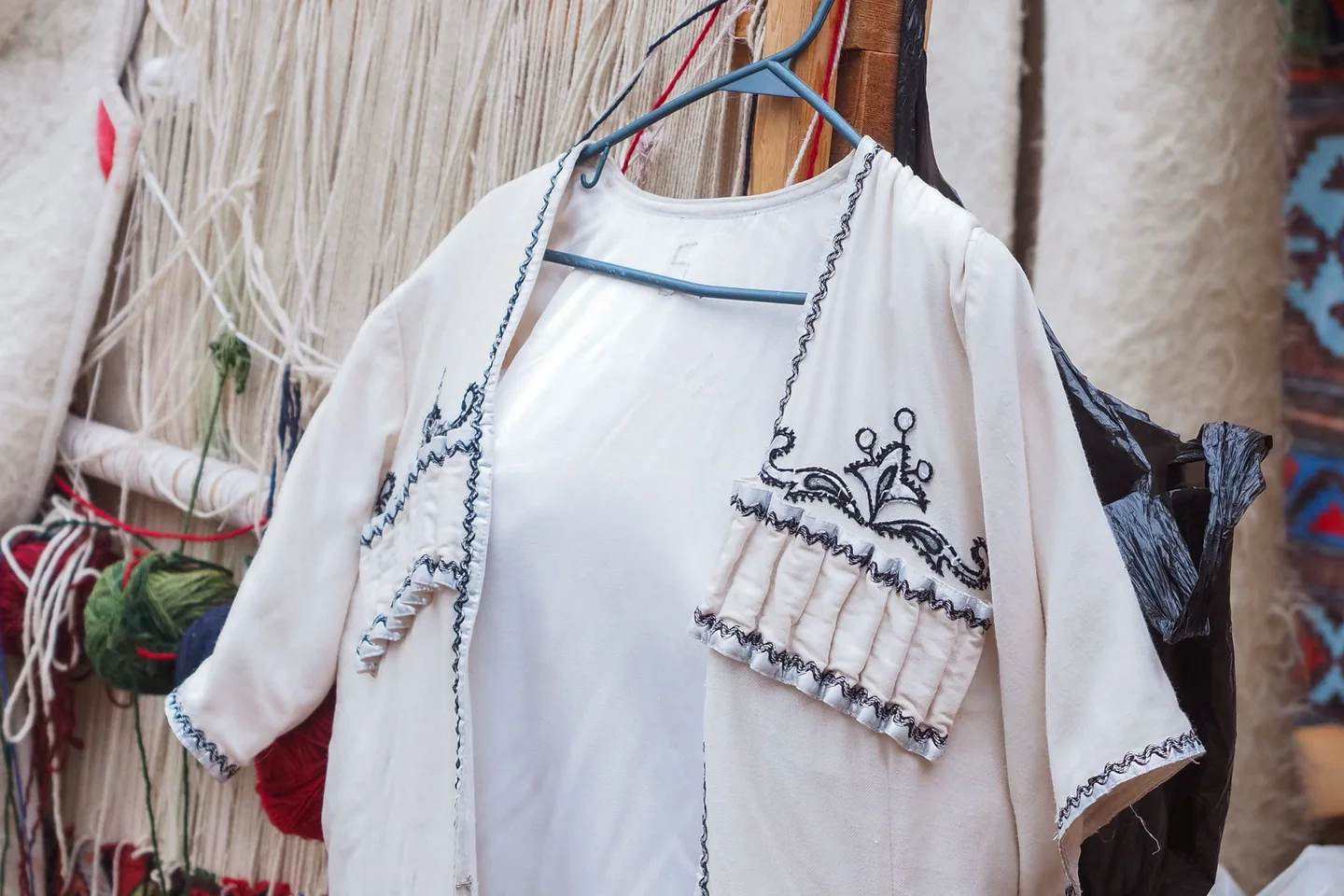
An embroidered garment can attract attention through colour before you notice anything else. Slow down and look at how the stitching sits on the fabric, where the design is placed and how the piece is meant to be worn or used. These observations provide a starting point for questions that go beyond whether a pattern is pretty.
Ask who made the piece and how the seller is connected to that work. The answer might describe one maker, a workshop or a retail arrangement involving several producers. Listen to the actual explanation without assuming that every object on a stall has the same origin. A clear account is more useful than a romantic story supplied by the visitor.
If you want to know about a motif, ask what the maker or seller can tell you about this particular example. Do not assign a universal meaning from a similar image seen online. Designs can have contexts that are not obvious to an outsider, and a person may choose to discuss the technique rather than interpret every form. Accept that boundary.
Questions that invite a concrete answer
Ask which part of the work takes the most attention, how the design is planned or what material was used for the base fabric. These questions give the person room to explain the process in their own terms. Avoid treating the conversation as a test in which you already expect one correct answer about authenticity.
The distinction between work done by hand and other methods may matter to your purchase, but ask directly and respectfully rather than trying to diagnose it from one visual clue. Neatness, regularity or small variations do not on their own tell the full story. If the seller cannot answer, decide whether the information available is enough for you; do not replace uncertainty with an accusation.
Ask permission before photographing the work closely, particularly if you want detailed images of a design. Permission to look at a garment or buy it does not automatically resolve every use of photographs. Explain what you intend, such as keeping a personal record of the visit. If the answer is no, put the camera away without making the conversation awkward.
Think about the whole garment
If you intend to wear the piece, check fit and construction as well as the embroidery. Ask where you may try it on and how to handle it. Look at the dimensions that matter to your body rather than assuming a size label matches your usual clothing. A beautiful panel does not remove the need for a garment to sit comfortably.
Discuss care before buying. Ask how the fabric and stitching should be cleaned, dried and stored, and whether the maker has written instructions. Do not apply a generic routine simply because another embroidered item tolerated it. If the required care does not fit your habits, it is better to know before the purchase.
Price comparisons also need context. Two pieces may use different amounts of work, different materials or different construction. Ask what distinguishes them rather than assuming the smaller item must be quicker to make. You can respect an explanation and still decide that a piece is beyond your budget.
Keep the name or preferred business contact with the garment if the maker offers it. The lasting value of the visit may include a better understanding of one person's work, even if you buy nothing. Looking at embroidery with attention means allowing the object to be more specific than a generic symbol of the place you visited.