Draw the return before following the shoreline
A coastal walk can appear continuous from a distance while being interrupted by private facilities, rocky sections or a route that ends above the water. Before starting, identify a recognised path and a practical exit. Do not assume that walking along the edge will eventually lead to another convenient road.
Decide whether the outing is an out-and-back walk or a point-to-point route. For the latter, confirm the connection at the far end before leaving. A taxi pickup or bus stop should be a real arrangement, not simply an expectation that transport will appear in the next settlement.
Ask about current access and the surface. A promenade and an uneven coastal trail require different planning even when both are described as seaside walks. Consider steps, exposed stretches and places to pause. Choose the route for the group rather than selecting the longest line beside the sea.
Keep the view separate from the edge
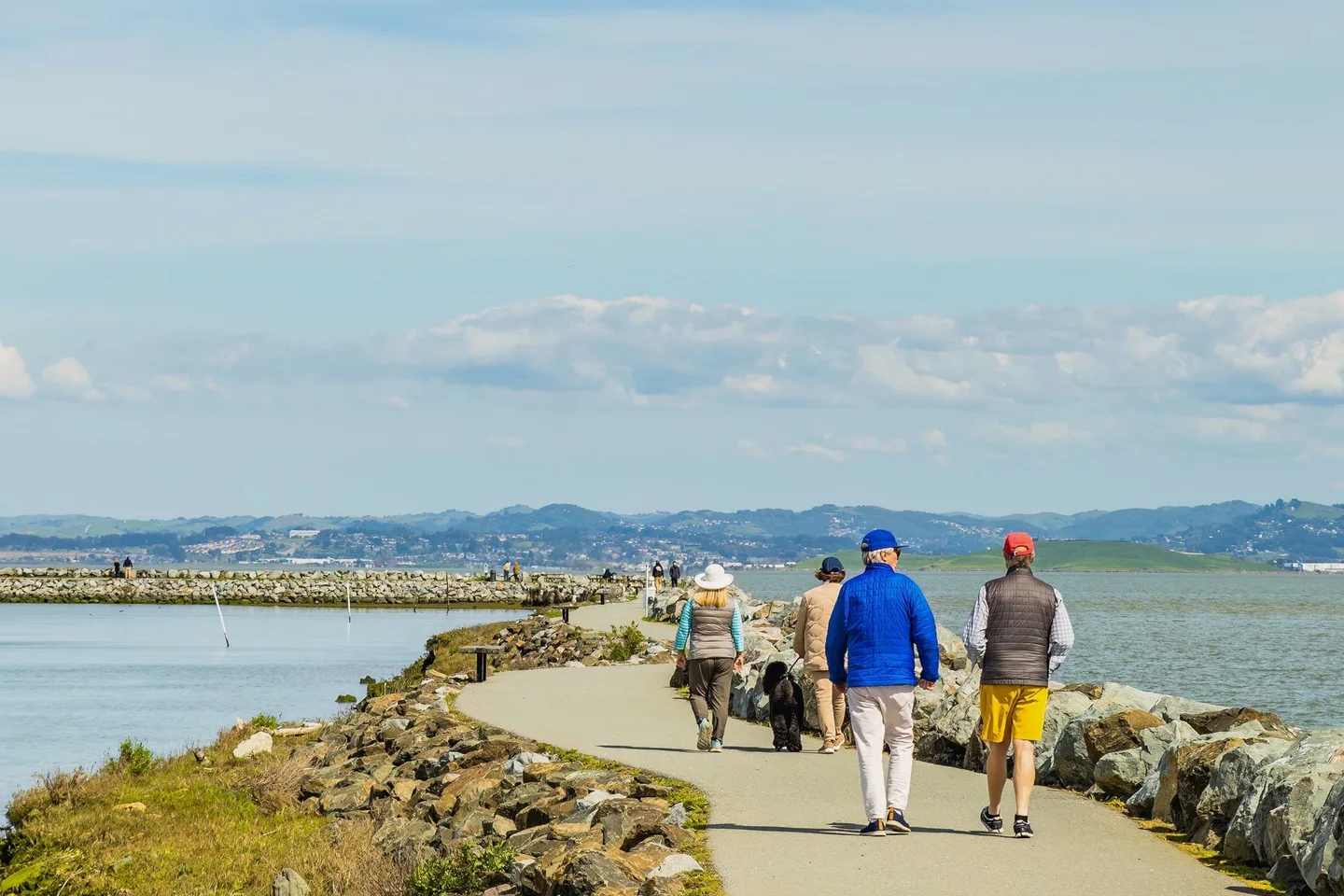
Use established viewpoints and respect barriers. A clearer angle for a photograph is not a reason to move onto an informal ledge or descend toward the water. Where the path narrows, stop only where others can pass and keep your attention on walking until you reach a suitable pause.
Make one known landmark your decision point. Check the remaining distance and return arrangement there. If the group is moving more slowly than expected or conditions change, turn back while the choice is straightforward. Avoid relying on an unmarked shortcut to rescue an overlong plan.
Finish where the outing can end comfortably: a public square, a visitor area or the transport point you already identified. A meal nearby can provide a natural closing pause without extending the walk unnecessarily. The coast does not need to be followed as far as possible. A route with a clear return lets you spend more attention on the water, the town and the changing views along the way.