Separate essential items from things you can leave behind
A dry bag becomes more useful when it holds a small, deliberate set of belongings. Before a boat outing, decide what must travel with you, what can remain in proper storage and what does not need to come at all. Carrying less makes boarding and finding things easier.
Ask the operator about storage aboard and expected exposure to spray. A covered compartment, an open bench and a shared box offer different arrangements. Do not assume the boat will keep personal items dry simply because the route is short or the photograph shows calm water.
Read the instructions for the bag you own. Closing methods and intended uses vary. Check it before the trip using a harmless item rather than testing its condition with a phone or travel document already inside. A bag described as resistant to water is not automatically intended for immersion or prolonged exposure.
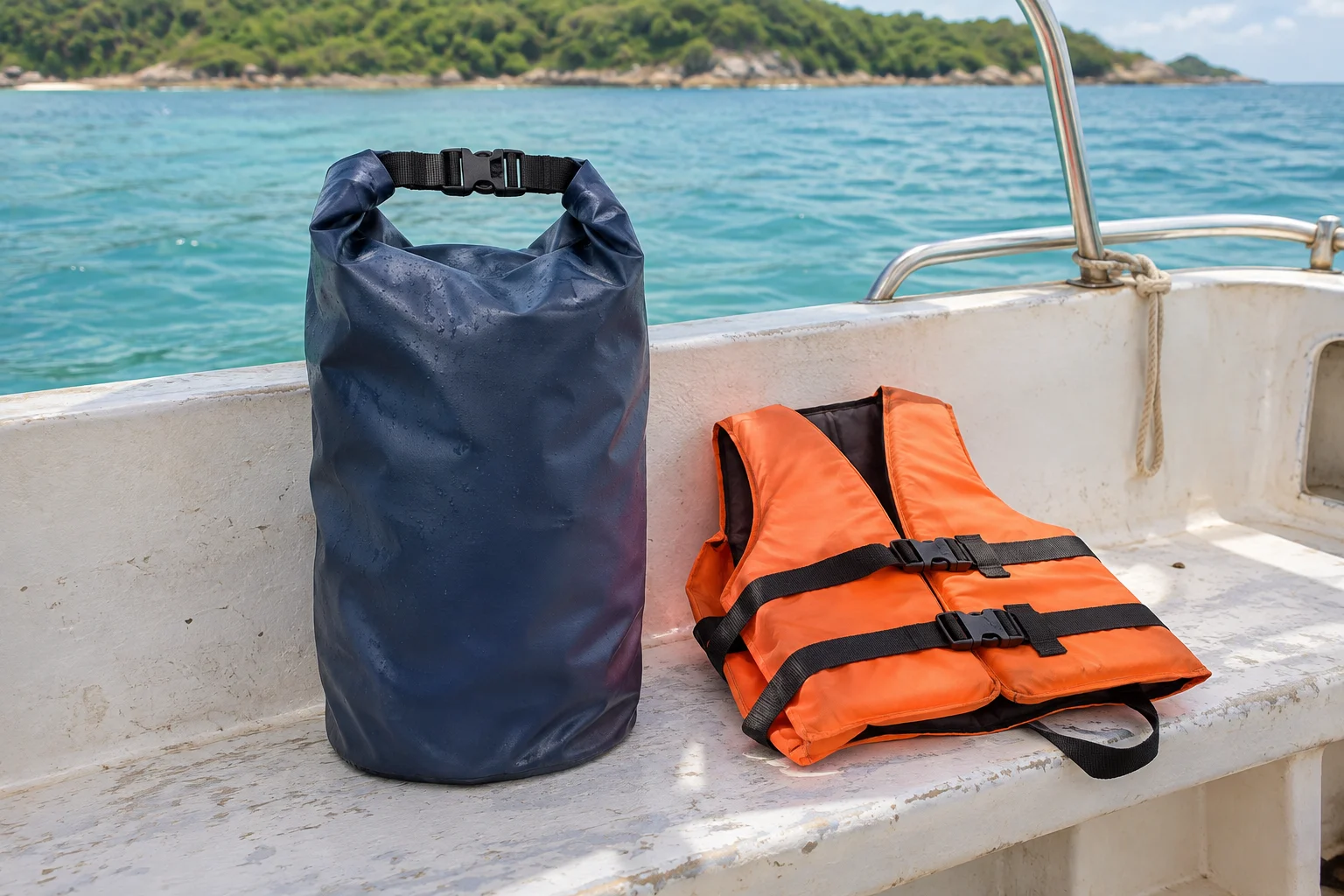
Divide items by when you need them
A useful packing order follows the outing. Boarding information belongs where it can be shown before the bag is closed. A dry layer needed after a landing can remain deeper inside. Small objects that tend to disappear should have one inner pouch rather than several loose hiding places. This organisation reduces the number of times you need to open everything aboard.
Keep the empty space required by the closure system. A bag packed to its limit on the outward trip may not close properly once a damp towel or extra item is added. Plan the return load too. If something important must remain dry under conditions beyond the bag's intended use, ask the operator about appropriate storage rather than relying on the product name. A clear limit is more useful than a vague waterproof promise.
Pack so the bag can stay closed
Place frequently needed items where you can reach them without emptying the whole bag. If a phone is only needed for boarding information, use it before departure and put it away. Repeatedly opening a bag with wet hands can defeat a careful packing arrangement.
Keep sharp or awkward objects from stressing the material. Avoid filling the bag so tightly that it cannot close as instructed. Ask where it should be placed aboard and follow the crew's direction; do not attach loose straps to equipment or create something that interferes with movement.
Carry important information in a form available without a connection, but do not bring unnecessary original documents simply out of habit. Use the operator's stated requirements to decide what is needed. After the outing, dry and inspect the bag according to its care instructions. The point is to keep essential belongings organised through a real activity, not to assume one piece of equipment removes every concern about water or storage.